Follow Us


Complete Guide to Tajweed Rules for Beginners 2025
Tajweed rules are essential for reciting the Holy Qur’an with precision, beauty, and reverence. They ensure that each letter is pronounced correctly, just as it was revealed to the Prophet Muhammad ﷺ.
At Bayana Quran, we emphasize the importance of mastering tajweed rules to preserve the authenticity of the Qur’anic message and deepen one’s spiritual connection.
This article introduces the fundamental tajweed rules every Muslim should learn to enhance their recitation and understanding of the Quran.
What Are the Tajweed Rules?

Understanding tajweed rules is essential for every Muslim, as they govern the correct pronunciation of the Holy Qur’an in its original Arabic form. The Qur’an was revealed to the Prophet Muhammad ﷺ through the angel Jibreel (Gabriel), and it must be recited exactly as it was revealed.
These rules preserve the accuracy, beauty, and rhythm of the Qur’anic recitation, ensuring that the message is conveyed properly, both in meaning and sound.
Let’s explore the key tajweed rules every learner should know:
1. Idhaar (Clear Pronunciation)
Applied when a Noon Saakin (نْ) or Tanween is followed by one of the throat letters (ء, هـ, ع, ح, غ, خ). The Noon or Tanween is pronounced clearly without merging or nasalization.
Example: مِنْ هَادٍ
2. Ikhfaa (Hidden/Nasal Pronunciation)
Occurs when Noon Saakin or Tanween is followed by one of 15 specific letters. The sound is pronounced between clear and merged, with a light nasal tone.
Example: مَنْ ثَمَرَةٍ
3. Iqlaab (Conversion)
When Noon Saakin or Tanween is followed by ب (Baa), it is converted into a Meem (م) sound with nasalization.
Example: أَنْبِئْهُمْ → pronounced as أَمبِئْهُمْ
4. Idgham (Merging)
Involves merging Noon Saakin or Tanween with the following letter if it is one of the Idgham letters (ي، ر، م، ل، و، ن). This can be with or without nasalization depending on the letter.
Example: مَنْ يَعْمَلْ → becomes مَيَّعْمَلْ
5. Madd (Prolongation)
Among the most important tajweed rules, Madd refers to elongating the sound of certain letters (ا، و، ي) for 2, 4, or 6 counts, depending on the type of Madd (natural or extended).
Example: قَالَ – “Qaala” is stretched
6. Qalqalah (Echoing Sound)
Applied to the letters: ق، ط، ب، ج، د when they carry a sukoon or appear at the end of a word. They are pronounced with a bouncing echo-like sound.
Example: يَقْطَعُ
7. Rules of Meem Saakin (مْ)
a. Izhar Shafawi (Clear Meem)
When Meem Saakin is followed by any letter except Meem or Baa, the Meem is pronounced clearly.
Example: وَهُمْ فِيهَا
b. Ikhfaa Shafawi (Concealed Meem)
Occurs when Meem Saakin is followed by ب (Baa). The sound is hidden with a light nasalization, lips closed.
Example: تَرْمِيهِمْ بِحِجَارَةٍ
c. Idgham Shafawi (Merging Meem)
When Meem Saakin is followed by another Meem, the two Meems are merged with clear nasalization.
Example: لَهُمْ مَغْفِرَةٌ
8. Lam Shamsiyyah & Lam Qamariyyah
Lam Shamsiyyah (Solar Letters): The “Lam” is silent and the next letter is stressed (shaddah).
Example: الشَّمْسُ
Lam Qamariyyah (Lunar Letters): The “Lam” is pronounced clearly.
Example: الْقَمَرُ
Begin Your Quranic Journey with Bayana Quran
Deepen your connection with the Holy Qur’an and expand your understanding of Islamic teachings through Bayana Quran. Learn from qualified instructors in a supportive online environment, with flexible scheduling and a thoughtfully structured curriculum designed to suit your individual pace.
Embark on your journey with Bayana Quran today—and discover a path of spiritual growth, stronger faith, and meaningful lifelong learning rooted in authentic Islamic knowledge.

Meaning of Tajweed
Tajweed is a well-known term among those who have studied Qur’anic recitation. Linguistically, it means to beautify, enhance, or perfect. In the Islamic context, Tajweed refers to the set of rules that ensure the Qur’an is recited as it was revealed—precisely and beautifully—just as the Prophet Muhammad (peace be upon him) received it from the angel Jibreel (Gabriel).
Applying the tajweed rules is not only about correct pronunciation, but also about preserving the sanctity and meaning of Allah’s words. Even small changes in pronunciation can alter the meaning of a verse, which highlights the importance of learning Tajweed. For Muslims, mastering these rules is a way to show reverence to the Qur’an and to connect more deeply with its divine message.
Learning Tajweed
It is highly recommended to learn tajweed rules from a qualified teacher who has mastered them, as they can provide proper guidance and correct any mistakes during recitation. Since it can be challenging to recognize one’s own errors, reciting in front of an experienced instructor is invaluable.
Self-practice is also effective when combined with listening to professional Quran reciters, such as Sheikh Mahmoud Khalil al-Husary, Mohammed Ayoub, or Mishary Alafasy. Recording your recitation and comparing it with theirs helps improve pronunciation and reinforces the correct application of tajweed rules.
For structured and flexible learning, students can enroll in Bayana Quran’s Tajweed course, which offers self-paced lessons through recorded videos guided by expert instructors. Additionally, many free resources and courses are available on platforms like YouTube, but consistent listening to accurate recitation remains key to mastering the tajweed rules.
The Importance of Tajweed
Tajweed is both the science and art of reciting the Quran with precise pronunciation, proper intonation, and rhythm. It is an essential part of Quranic study for Muslims worldwide. Not only does Tajweed enhance the beauty of the recitation, but it also ensures the accurate transmission and understanding of Allah’s divine message. This article highlights the significance of Tajweed, the benefits it brings, and its profound impact on the spiritual experience of believers.
Preserving the Authenticity of the Quran
The Quran was revealed in Arabic, and the tajweed rules play a vital role in maintaining the original form of its recitation. By strictly following these rules, reciters preserve the exact words as revealed to the Prophet Muhammad (peace be upon him), protecting the Quran from any accidental mispronunciations or alterations.
Enhancing Quranic Understanding
Tajweed promotes a deeper comprehension of the Quran by emphasizing the correct articulation of each letter and word. Mastery of the tajweed rules helps learners appreciate the linguistic nuances and phonetic details of the Arabic language, allowing for a richer and more accurate grasp of the sacred text.
Elevating the Spiritual Connection
Read Quran with proper Tajweed enriches the spiritual experience by instilling reverence and focus. The melodic flow created by observing the tajweed rules fosters tranquility and reflection, enhancing the connection between the worshipper and the Creator, especially during prayer.
Preserving the Oral Tradition
Tajweed ensures the continuation of the Quran’s oral tradition, passed down faithfully since the time of the Prophet Muhammad (peace be upon him). Learning and applying the tajweed rules makes individuals guardians of this invaluable heritage, preserving the Quran’s eloquence and correct pronunciation for future generations.
Promoting Unity Among Muslims
The universal application of Tajweed rules unites Muslims across the globe. Despite diverse accents and dialects, the tajweed rules provide a common standard for Quranic recitation. This shared practice fosters harmony and solidarity within the Muslim community, enabling believers from different backgrounds to recite the Quran in a consistent and respectful manner.
Read more: quran study online
What are the benefits of learning Quran Tajweed rules?
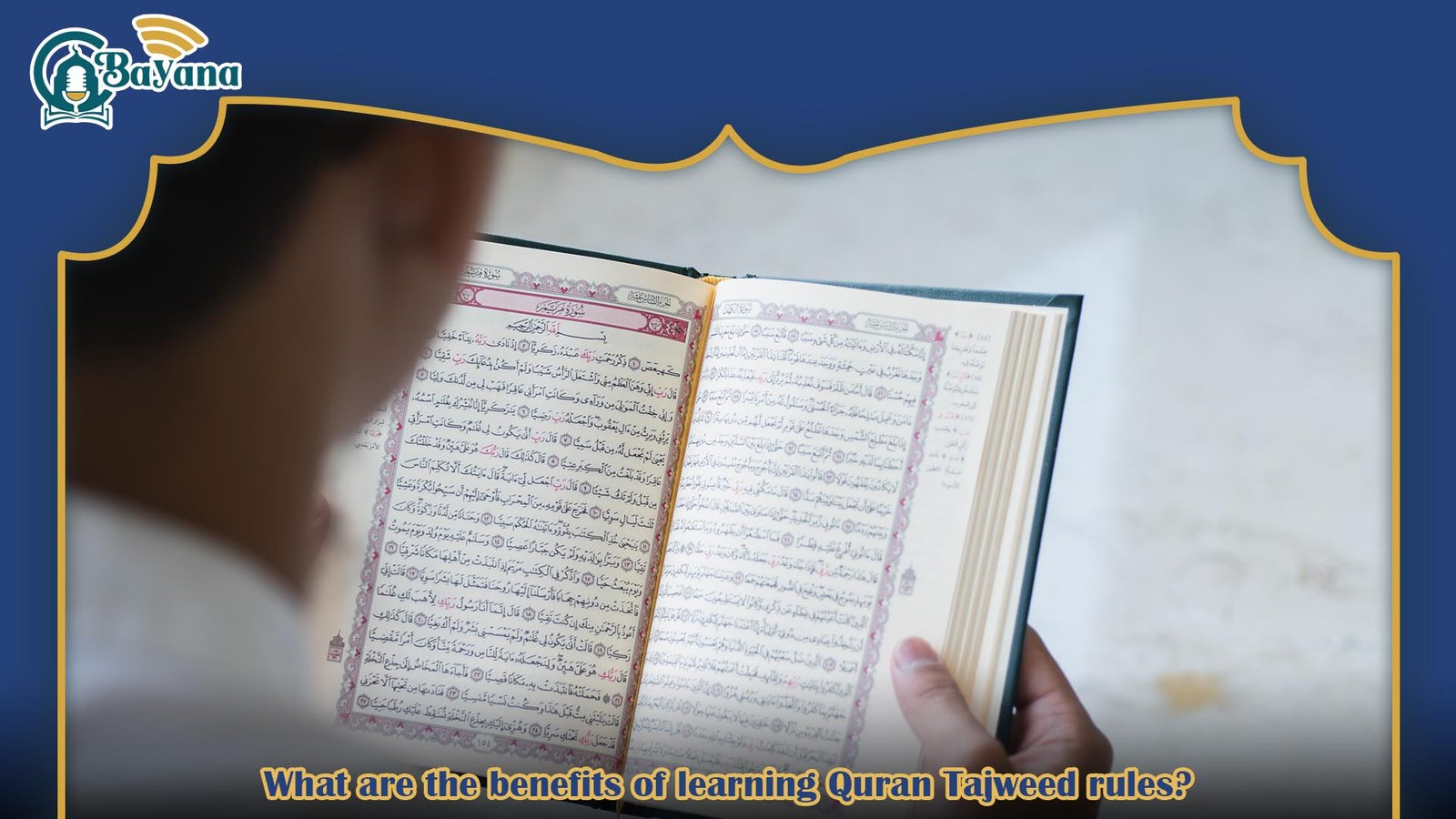
Learning the rules of Tajweed is a deeply rewarding journey that goes far beyond simple pronunciation. It involves understanding the linguistic nuances and spiritual depth of the Quran. The benefits touch on personal growth and also positively impact the wider community by ensuring a genuine connection with the holy book of Islam.
All Quran tutors emphasize the importance of both theoretical knowledge and practical application of Tajweed, especially in tajweed classes or tajweed Quran courses, to help learners fully grasp and implement the rules of Tajweed.
Accurate Quranic Recitation
The primary benefit of learning the Quran Tajweed rules is achieving precise pronunciation of Arabic letters and words. This ensures that learners recite the Quran exactly as it was revealed to Prophet Muhammad (PBUH), preserving its original sound and message. Without proper Tajweed, mistakes in pronunciation can alter meanings, which is why mastering the rules is essential in any Tajweed class.
Spiritual Connection
Mastering the rules of Tajweed allows for a deeper spiritual engagement with the Quranic verses. As learners become more confident in their recitation, they feel a stronger bond with the divine message, enhancing their overall spiritual experience. This connection fosters greater mindfulness and reverence during prayer and Quran reading sessions.
Preservation of Authenticity
Tajweed is vital for preserving the Quran’s authenticity. These rules have been passed down through generations to ensure the Quran is recited exactly as it was revealed. By learning Tajweed Quran rules, one becomes part of this long-standing tradition, maintaining the purity of the text and its pronunciation through time.
Increased Focus in Prayer
Learning Tajweed also improves concentration during Salah (prayer). When reciters can pronounce verses correctly and with confidence, it promotes mindfulness and devotion. This heightened focus leads to a more meaningful and fulfilling worship experience, connecting worshippers more deeply to their faith.
Elevated Worship Experience
Proper Tajweed enhances the beauty and melodiousness of Quranic recitation. The rhythm and intonation make the recitation more captivating, uplifting the spirit of both the reciter and listeners. This melodious quality is one reason why many seek Tajweed Quran courses to refine their skills.
Personal Development
Studying Tajweed requires dedication, patience, and discipline, traits that foster personal growth. These qualities carry over into other areas of life, helping individuals cultivate good character and perseverance through the consistent practice of Tajweed.
Community Contribution
Those who master the rules of Tajweed can share their knowledge by teaching others, whether in mosques or online platforms. This spreads proper Quranic recitation within the community, ensuring the continuation of authentic recitation and uniting Muslims through a shared understanding.
Emotional Impact
Tajweed allows for emotional expression through the Quran’s recitation. The correct pronunciation and melodious tones enhance the listener’s emotional connection to the verses, creating moments of reflection, healing, and spiritual comfort.
Intellectual Stimulation
Learning and applying Tajweed rules stimulates cognitive skills such as memory, attention, and linguistic abilities. This intellectual engagement boosts overall language proficiency, making Tajweed classes valuable not only for spiritual growth but also for mental development.
Cultural Appreciation
Understanding Tajweed deepens appreciation for Arabic language and culture. It highlights the beauty and complexity of the language in which the Quran was revealed, fostering respect for Islamic heritage and its linguistic richness.
Protection from Misinterpretation
Tajweed safeguards against mispronunciations that could change the meaning of Quranic verses. By following these rules, learners ensure that they convey the divine guidance accurately, avoiding potential confusion or misunderstandings.
Respect for the Quran
Learning Tajweed reflects deep reverence and respect for the Quran. It shows a commitment to honoring the sacred text by reciting it properly and with care, which is central to Islamic worship and education.
Practical Application
Tajweed is not limited to formal recitation but can be applied in daily conversations in Arabic. This practical use enhances overall language skills, making learners more confident and proficient speakers.
Receiving the Full Thawab
By learning and applying Tajweed Quran rules, children and adults alike can earn the full reward (Thawab) of Quran recitation. Islam commands Muslims to recite the Quran with Tajweed, ensuring their recitation matches that of the Prophet Muhammad (PBUH).
Beautifying the Quranic Recitation
One of the main purposes of Tajweed is to beautify the recitation of the Quran. Proper application of the rules creates a peaceful, almost meditative state for the reciter, allowing a deep intellectual and spiritual connection to the words.
Enriching Arabic Language Skills
Though it may seem complex, Tajweed reinforces the learner’s understanding of Arabic grammar and phonetics. This enriches their practical knowledge and encourages a deeper study of the language.
Lifelong Learning
Tajweed offers continuous opportunities for growth and refinement. Whether through tajweed for beginners or advanced courses, learners are encouraged to keep improving their skills throughout life.
Improved Memorization
Correct pronunciation and rhythm facilitated by Tajweed help enhance memorization of Quranic verses. This aids in retaining the text more effectively during Quran memorization (Hifz).
Spiritual Reflection
Tajweed promotes thoughtful contemplation on Quranic meanings. The beauty of recitation encourages deeper reflection, making Quran study a more profound spiritual journey.
Connection to Islamic Heritage
Learning Tajweed connects individuals to a rich cultural and religious legacy, fostering a sense of identity and belonging within the global Muslim community.
Community Bonding
Shared knowledge of Tajweed fosters unity. When Muslims around the world recite with the same rules, it strengthens community ties and promotes harmony.
Spiritual Healing
The soothing sound of proper Tajweed recitation can have a calming effect on the soul, providing emotional healing and peace.
Strengthened Arabic Language Skills
Understanding Arabic pronunciation intricacies through Tajweed enhances overall language proficiency, benefiting communication and comprehension.
Enhanced Public Speaking Skills
Clear articulation practiced in Tajweed improves public speaking abilities, making learners more effective communicators in various settings.
Cultural Appreciation and Tolerance
Studying Tajweed nurtures cultural sensitivity and appreciation for linguistic diversity within the Islamic tradition.
Educational Leadership Opportunities:
Proficiency in Tajweed opens doors for teaching and leadership roles within Islamic education, enabling learners to guide others.
Positive Impact on Character
The discipline and commitment needed to learn Tajweed cultivate virtues like patience, humility, and perseverance, positively shaping one’s character.
Frequently Asked Questions About Tajweed Rules
This is one of the most frequently asked questions by students, professionals, and researchers in various fields across the world.
What are Tajweed rules and why are they important?
Tajweed rules are guidelines for the correct pronunciation and recitation of the Quran. They are important because they preserve the original way the Quran was revealed and ensure that the meaning is conveyed accurately.
Can I learn Tajweed rules on my own, or do I need a teacher?
While self-study is possible using online resources and recordings, learning Tajweed with a qualified teacher is highly recommended. A teacher can correct mistakes and provide personalized guidance that is crucial for proper learning.
How long does it take to master the rules of Tajweed?
The time varies for each person depending on their dedication and practice. For beginners, it might take several months to grasp the basics, but mastering Tajweed is a lifelong journey of continuous learning and improvement.
In conclusion, Tajweed rules are essential for anyone seeking to connect deeply with the Quran through correct and beautiful recitation. Mastering these rules not only preserves the authenticity of the divine message but also enriches the spiritual and linguistic experience of the reciter.
Whether you are a beginner or looking to refine your skills, understanding and applying Tajweed rules will elevate your Quranic journey, making it more meaningful and impactful. Embracing Tajweed is truly a lifelong commitment that benefits both the individual and the wider community.
Read more: holy quran