Follow Us

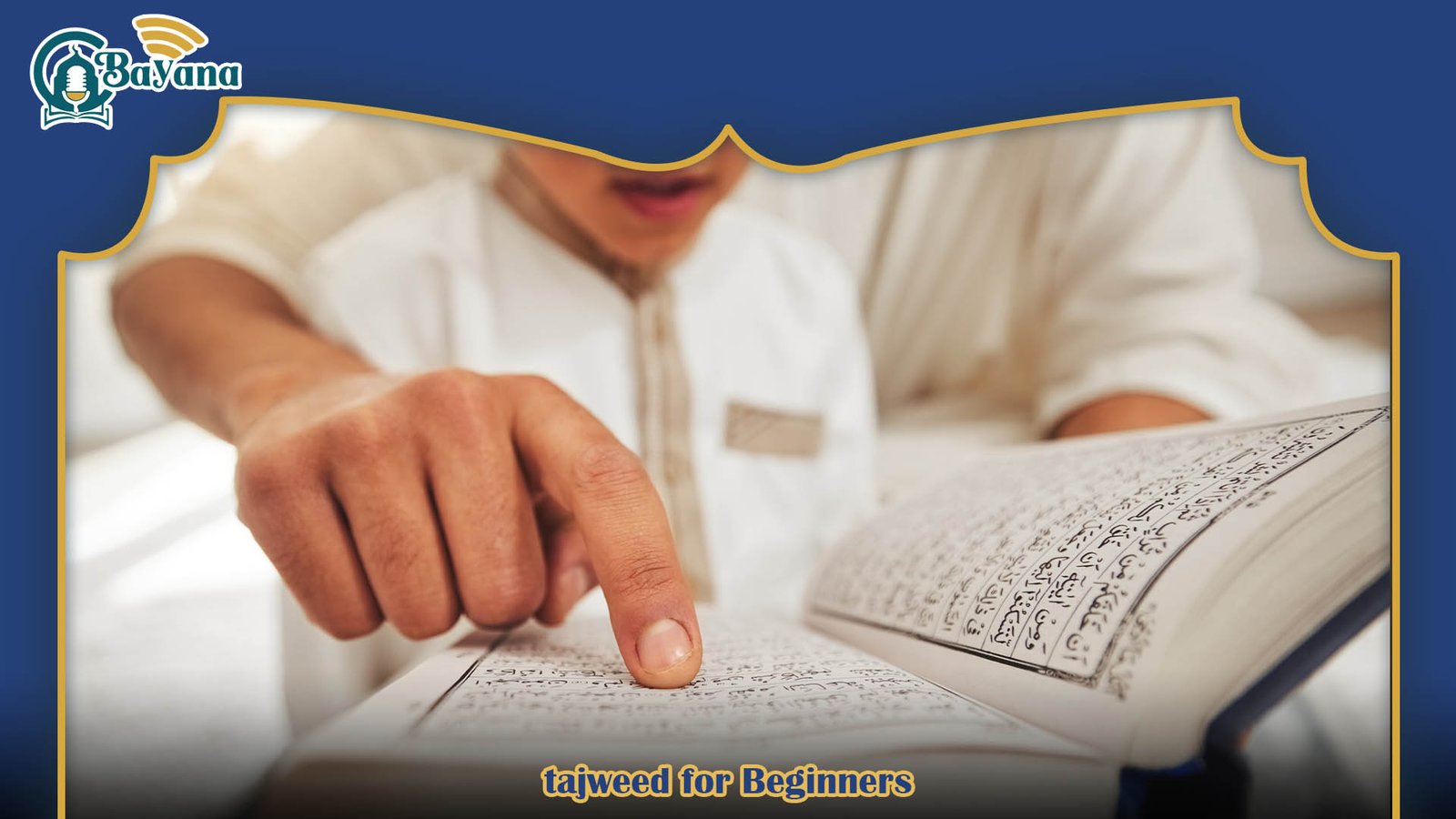
The Importance of tajweed for Beginners 2025
When starting your journey to recite the Quran beautifully and correctly, tajweed for beginners is the essential foundation you need. At Bayana Quran Academy, we understand how important it is to learn the rules of tajweed clearly and effectively.
Our courses are designed to help beginners grasp the correct pronunciation and articulation of Arabic letters, ensuring that every learner can recite the Quran as it was meant to be heard.
Whether you are new to Quranic recitation or looking to improve your skills, Bayana Quran provides the support and guidance to make your learning journey successful and rewarding.
Understanding Idgham in Tajweed for Beginners
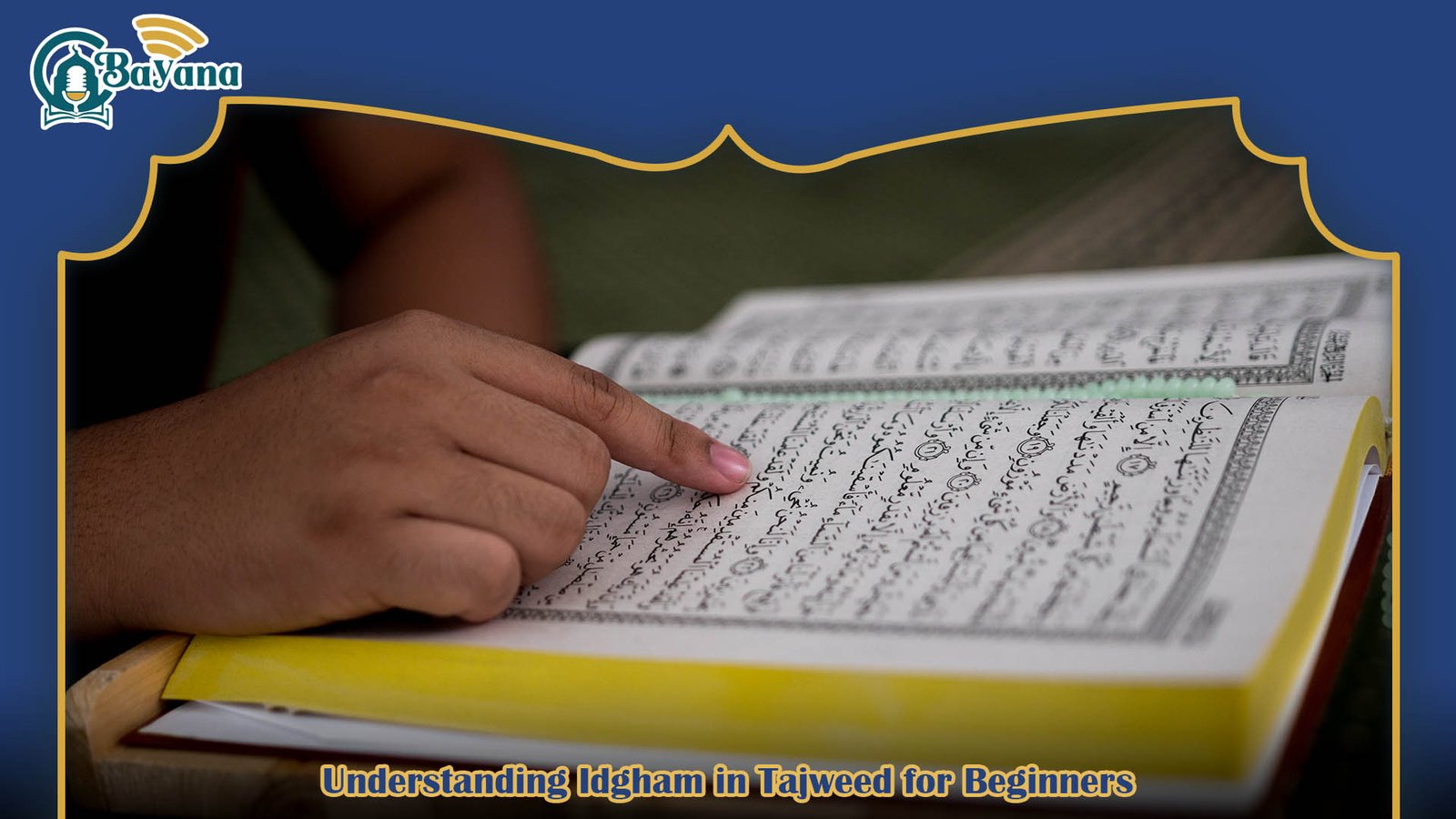
Idgham is one of the essential rules in tajweed for beginners, and it refers to merging a Noon Sakinah or Tanween with the following letter, so the two letters are pronounced as one, often with a stressed sound.
Mastering this rule is a foundational step in the learning journey of tajweed for beginners, as it appears frequently in Quranic recitation and significantly affects the clarity and beauty of one’s reading.
There are two main types of Idgham
Complete Idgham occurs when the Noon Sakinah or Tanween is fully merged into the next letter with a clear nasal sound (ghunnah), as in the example: “man raḍiya”, where the Noon merges entirely into the letter Ra.
Partial Idgham involves a lighter merging, where the sound blends but maintains the ghunnah, as seen in: “man shā’a”, where the Noon blends with the letter Sheen.
The letters that cause Idgham are six, grouped in the mnemonic “يَرْمَلُون” (Ya, Ra, Meem, Lam, Waw, Noon).
Four of these letters (Ya, Meem, Waw, Noon) cause Idgham with ghunnah, while the other two (Ra and Lam) result in Idgham without ghunnah.
Understanding Idgham is a core part of tajweed for beginners, and it helps learners improve their pronunciation and fluency.
The nasal sound, or ghunnah, plays a vital role in softening the recitation and making it more melodious.
For anyone studying tajweed for beginners, practicing Idgham is crucial to reciting the Quran accurately and beautifully, and it lays the groundwork for deeper mastery of other tajweed rules.
Discover the Quran with Bayana Quran
Strengthen your bond with the Holy Quran through Bayana Quran’s expert-led programs. Our courses guide you in mastering Quranic Arabic and reciting with proper Tajweed. Whether you are just starting or seeking to refine your skills, our engaging lessons and supportive environment make the journey simple and rewarding.
Take the first step with Bayana Quran today and begin a meaningful path toward understanding the Quran as it was revealed. Enroll now!

The Importance of Choosing the Right Approach for Tajweed for Beginners
Choosing the right approach to learn tajweed for beginners greatly impacts how effectively one improves their Quranic recitation. Beginners need flexibility, clear structure, and expert guidance to achieve the best results.
The method should allow learners to study at their own pace and at times that fit their daily schedule, without being restricted by fixed hours or traditional teaching methods.
This flexibility helps maintain motivation and consistency, which are essential for mastering the rules of tajweed.
The Need for a Gradual Educational Plan in Tajweed for Beginners
Having a clear and gradual educational plan tailored to the learner’s age and level is crucial for tajweed for beginners.
Whether the learner is a child or an adult, introducing tajweed rules step by step—from basic articulation points to more advanced rules like ghunnah, idgham, and ikhfa—ensures steady progress.
For children, teaching methods should be interactive and practical, focusing on repetition, listening, and correct pronunciation to build a strong foundation.
Regular practice through structured sessions that include repetition, correction, and memorization reinforces a deep understanding of tajweed for beginners, leading to a more beautiful and accurate Quranic recitation.
read more: quran lessons
Learning Holy Quran Tajweed in Warsh Narration
The Warsh narration of Quranic tajweed differs from the more commonly known Hafs An Asim narration, especially in how certain letters are pronounced. For example, in Warsh, every “raa” (ر) that is open (with a Fatha) or rounded (with a Damma) is pronounced softly if it is preceded by a static “yaa” (ياء) or a connected Kasrah within the same word.
The “yaa” can be elongated or soft, and the “raa” may appear at the middle or end of a word, articulated with Damma or Fatha, with or without Tanween. Understanding these nuances is essential for anyone learning tajweed for beginners aiming to master the Warsh style.
To begin with, learners must focus on accurately identifying the articulation points (Makharij) and characteristics (Sifat) of each letter.
This foundational knowledge is vital for grasping the rules of tajweed. A proper study of the articulation of letters supports beginners in applying the specific rules of Warsh narration effectively.
For those new to tajweed for beginners, starting with the basics of letter pronunciation sets the stage for progress.
The Rules of Tafkheem (Emphasis) and Tarqeeq (Softening)
In tajweed, letters are categorized based on how they are pronounced: either with Tafkheem (emphasis) or Tarqeeq (softening), and some letters can be pronounced both ways depending on context.
The letters known for Tafkheem, or “الاستعلاء,” include the group in the phrase “خص ضغط قظ.” These letters are always pronounced with a heavy, deep sound. On the other hand, the softened letters, called “الاستفال,” include all other alphabetic letters except Alif, Ra, and Lam.
Among the letters that change pronunciation are:
Lam: Usually softened except when it appears in the name of Allah (الله). In this case, it is emphasized if preceded by a Fatha or Damma but softened if preceded by a Kasrah.
Ra: Pronounced with emphasis when open (with Fatha) or rounded (with Damma), or when silent followed by an emphasized letter within the same word. It is softened when it carries a Kasrah, whether at the start, middle, or end of the word.
Alif: Always softened, except when it follows an emphasized letter, in which case it takes on the Tafkheem.
For anyone serious about tajweed for beginners, understanding Tafkheem and Tarqeeq is key to delivering a proper and beautiful Quranic recitation, especially in the Warsh narration style.
Starting with these principles ensures that learners develop a strong foundation in the correct pronunciation and rhythm of the Quran.
Common Questions About Tajweed for Beginners
For those starting their journey with tajweed for beginners, many questions often arise about how best to learn and practice the rules of Quranic recitation.
One common question is about the best way to receive effective training that combines learning and practical application. Having access to interactive lessons and personalized guidance can greatly improve the learning experience.
Beginners want to understand how to apply tajweed rules correctly to improve their recitation and connect deeper with the Quran.
learn more: learn tajweed online
The Best Way to Learn Quran Tajweed for Beginners
One excellent way to learn tajweed for beginners is through platforms that offer live interaction with qualified teachers and tailored educational plans. These platforms provide video lessons, audio examples, and exercises to reinforce the rules of tajweed.
For example, learners can record their recitation and get feedback to help improve their pronunciation and fluency. Additionally, choosing a plan that fits your personal schedule and level ensures consistent progress without feeling overwhelmed.
Another important aspect for beginners is understanding the Tajweed of the Quran in the Hafs An Asim narration, which is the most widely used method around the world.
Learning Tajweed for beginners in this narration helps one recite the Quran correctly and understand its meanings better by applying the appropriate rules to each letter and word.
Whether you prefer to study independently or with a teacher, a structured and flexible approach is key to mastering tajweed for beginners successfully.
The Importance of Tajweed for Beginners: More Than Just Reading
For those starting their journey with tajweed for beginners, it’s vital to understand that Tajweed is not merely about reading the Quran’s text—it’s about mastering the art of recitation as it was originally revealed.
Proper Tajweed preserves the Quran’s beauty and meaning, ensuring every letter and sound is pronounced correctly. Whether you are completely new to Quranic recitation or someone who reads but wants to correct frequent mistakes, learning and applying Tajweed rules is essential.
Many beginners benefit greatly from online Tajweed lessons, as these provide structured support to enhance accuracy and build confidence in reciting the Quran properly.
Why Online Learning is the Best Approach for Tajweed Beginners
Across the globe, many Muslims can recognize Arabic letters, yet their pronunciation is often shaped by their mother tongue, causing errors in recitation.
This makes tajweed for beginners critical, as it teaches the correct way to pronounce each letter and sound, ensuring the Quran is recited beautifully and precisely.
Tajweed training helps learners produce the melodic and measured recitation required by the Quranic text.
Simply understanding Arabic does not guarantee correct recitation; mastering Tajweed is the key to reciting the Quran accurately and with the proper reverenc
The Importance of Tajweed in Preserving the Quran’s Divine Message
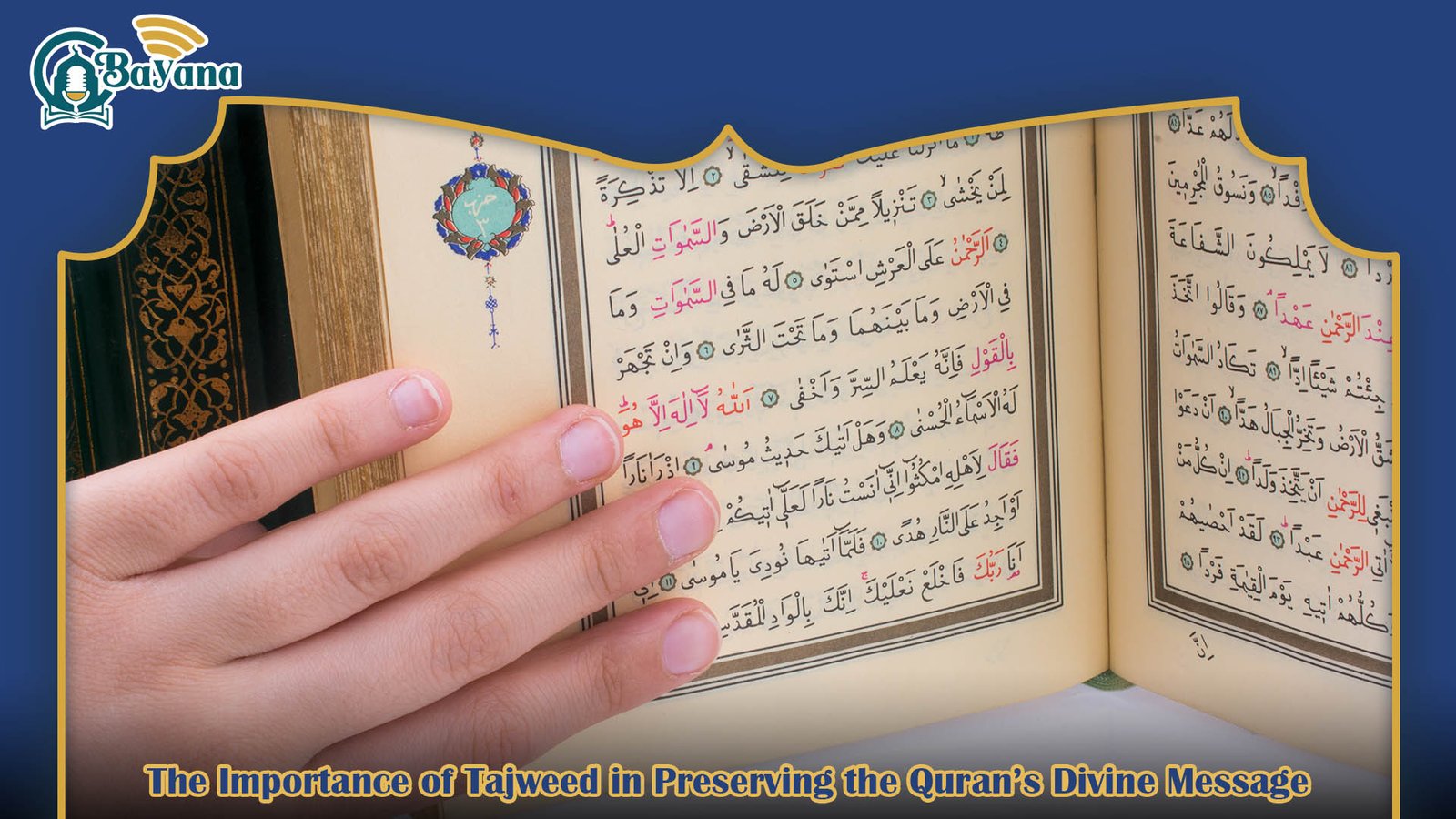
This content will explore why every syllable of the Quran is sacred and must be recited with utmost precision and reverence.
It will explain how Tajweed serves as the essential tool for Muslims to pronounce the Quran correctly, preserving the exact way it was revealed to the Prophet Muhammad (peace be upon him).
The article will highlight the Quranic instruction to “recite with measured recitation” and emphasize the spiritual responsibility that comes with learning and teaching the Quran.
will inspire readers with the Prophet’s encouragement about the virtues of learning and teaching the Quran, motivating Muslims to deepen their connection with the Quran and actively share its teachings with others.
Frequently Asked Questions about Learn Arabic for Beginners
Here are some common questions with clear answers to guide you on your journey to learn Arabic for beginners.
How can I start to learn Arabic as a beginner?
Beginning your Arabic journey requires dedication and consistency. Start with a structured course for beginners that introduces the Arabic alphabet, basic vocabulary, and simple grammar. Daily practice and steady vocabulary building will help you progress effectively.
What’s the fastest way to speak Arabic fluently as a beginner?
For beginners aiming for fluency, focus on learning and reviewing vocabulary daily, practicing speaking regularly, and using interactive resources. Engage with native speakers, practice cultural immersion, and try shadowing exercises to quickly improve pronunciation and confidence.
read also: learning quran for beginners
In conclusion, mastering tajweed for beginners is the essential first step toward reciting the Quran with precision and beauty. It forms the foundation for anyone who wishes to connect deeply with the divine text.
At BayanaQuran Academy, we are dedicated to providing clear guidance and supportive teaching methods that make learning tajweed an enjoyable and effective journey.
With commitment and consistent practice, every beginner can make remarkable progress, enhancing their Quranic recitation and enriching their spiritual experience.