Follow Us

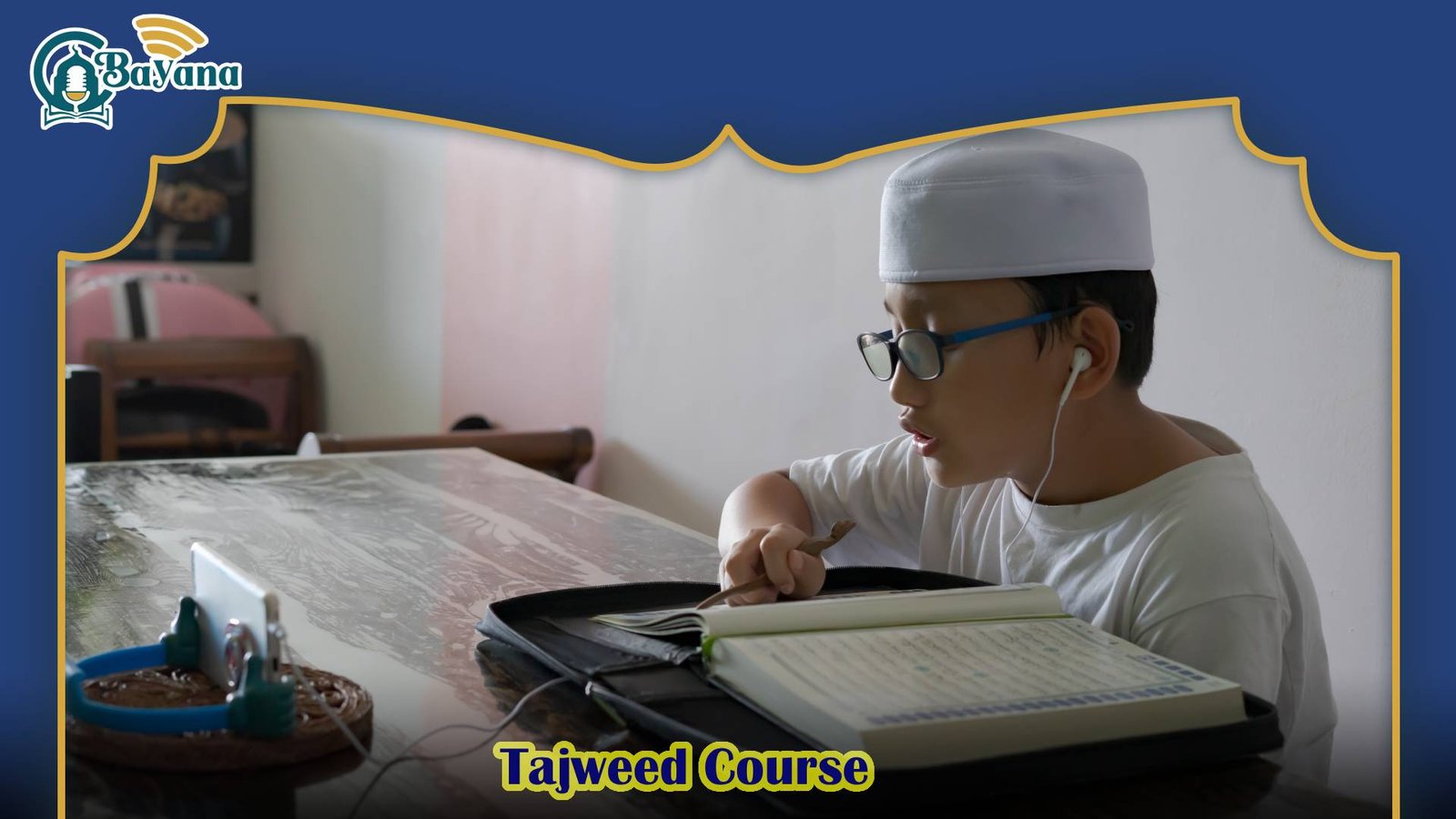
tajweed course in U.K for Beginners: Basics of Proper 2025
tajweed course in U.K by Bayana Quran is an essential learning journey for anyone who wishes to recite the Holy Qur’an with accuracy, beauty, and proper pronunciation. This course provides step-by-step guidance on the rules of Tajweed, helping learners master the articulation points of Arabic letters, the correct elongations, and the subtle nuances that bring Qur’anic recitation to life.
Whether you are a beginner or seeking to refine your skills, Bayana Quran’s tajweed course in U.K will deepen your connection to the Qur’an and enhance the spiritual experience of reading it.
What Is Tajweed?

Tajweed is the art of reciting the Quran with precision and beauty, just as it was revealed to Prophet Muhammad ﷺ. It consists of rules that ensure the correct pronunciation of every letter, word, and verse, preserving the Quran’s original form. Recitation is more than reading; it is an act of worship that deepens your spiritual connection with Allah’s words.
Although learning Tajweed may seem challenging at first, understanding its significance and history makes the journey truly rewarding. It helps preserve the purity and beauty of the Quran for future generations. Mastering Tajweed allows every Muslim to convey the meanings of the Quran with greater clarity and experience a unique spiritual connection with every recitation.
Discover the Beauty of the Quran with Bayana Quran
Are you eager to strengthen your bond with the Quran and master its language? Bayana Quran offers expert-led courses tailored to help you learn Quranic Arabic and refine your recitation through Tajweed. Whether you’re just starting or aiming to improve your skills, our interactive lessons and welcoming community ensure a motivating and accessible learning experience.
Join Bayana Quran today and embark on a transformative journey to understand the Quran as it was revealed. Enroll now!

How to Begin Your Tajweed Course Journey
Starting a tajweed course in U.K may feel challenging initially, but thanks to the wide range of resources available today, learning has become much more accessible. Traditionally, Tajweed was taught directly by a qualified teacher who guided students through the articulation points and specific characteristics of each Arabic letter. Nowadays, besides in-person teachers, there are numerous online platforms, instructional videos, and books offering clear, step-by-step lessons on Tajweed rules.
For beginners, it’s important to focus first on mastering the foundational rules, gradually enhancing skills with consistent practice. Recording your recitation is a helpful technique to identify errors and improve your pronunciation. Many learners benefit greatly from participating in Tajweed classes or study groups, where constructive feedback and encouragement help accelerate progress.
Tajweed is not merely a collection of rules; it represents a meaningful connection to the Quran. By studying and applying Tajweed, we show respect for the Quran’s message, achieve more accurate recitation, and enrich our spiritual experience. With today’s wealth of learning tools, mastering Tajweed is more achievable than ever before. Take the first step in your tajweed course in U.K journey today and discover the true beauty of Quranic recitation.
Rules of Tajweed
Tajweed is a detailed and rich science, but understanding its core rules is essential for proper Quranic recitation. Here are some fundamental rules that guide the correct pronunciation and flow:
Makhaarij (Articulation Points)
Every Arabic letter has a specific point of articulation in the vocal tract, such as the throat, tongue, or lips. Correctly pronouncing letters from their proper makhraj ensures clarity and accuracy in recitation.
Sifaat (Characteristics of Letters)
Each letter carries unique attributes — such as heaviness (tafkhim) or lightness (tarqiq), sharpness, or softness — which influence the tone and sound when reciting. Mastering these characteristics brings life to the recitation.
Rules of Noon Sakinah and Tanween
When noon sakinah (نْ) or tanween (ً ٍ ٌ) appears, different rules apply depending on the following letter. These include:
- Idgham (Merging): Merging the noon sound into the following letter.
- Iqlab (Conversion): Changing the noon sound into a meem sound before specific letters.
- Ikhfa (Concealment): Pronouncing the noon sound softly and partially hiding it.
- Izhar (Clear Pronunciation): Pronouncing the noon sound clearly without merging.
Rules of Meem Sakinah
Similar to noon sakinah, meem sakinah (مْ) has specific rules:
Idgham Shafawi: Merging the meem into another meem.
Ikhfa Shafawi: Concealing the meem sound before certain letters.
Izhar Shafawi: Pronouncing the meem clearly when not merging or concealing.
Idgham (Merging Letters)
This rule involves merging certain letters into the next to ensure smoothness and continuity in recitation, avoiding breaks or pauses. It helps create a fluid and melodious flow in the Quranic text, making the recitation easier to listen to and more beautiful. Idgham also preserves the meaning by connecting sounds naturally without disrupting the rhythm or clarity of the verses.
Ghunna (Nasalization)
A nasal sound produced mainly during the recitation of noon and meem in specific contexts. Ghunna adds a melodious nasalization that lasts for about two counts, enhancing the beauty of recitation.
Madd (Elongation):
This involves stretching the sound of vowels or letters for a specific duration to emphasize meanings or beautify the recitation. Different types of madd include natural, compulsory, and permissible elongations.
Learning Tajweed
It is highly recommended to learn Tajweed from a qualified teacher who has mastered the art of Quranic recitation. A skilled instructor can guide you step-by-step through each rule, helping you avoid common mistakes that are often difficult to detect on your own. Reciting in the presence of a teacher allows for immediate correction and improvement.
Self-practice is also beneficial, especially when combined with listening to professional reciters such as Sheikh Mahmoud Khalil al-Husary, Mohammed Ayoub, or Mishary Alafasy. Recording your recitation and comparing it with theirs can help you identify areas for improvement and internalize the correct pronunciation and Tajweed rules.
You can attend classes at your local mosque or join online courses like Quranic’s Tajweed course, which offers structured lessons through recorded videos that allow students to learn at their own pace. Additionally, many valuable Tajweed courses are available on YouTube. Consistent listening to accurate recitations is essential for mastering Tajweed and perfecting your Quranic pronunciation.
Why Learning Tajweed is Important
Learning Tajweed not only enhances the beauty and melody of Quranic recitation but also plays a crucial role in preserving the accuracy of the message.
Without applying Tajweed rules, the pronunciation errors can lead to altering the meanings of words, since many Arabic letters are similar and distinguished only by specific articulation rules. Even incorrect application of elongation (madd) can change the intended meaning of a verse.
Moreover, Tajweed helps the reciter develop a deeper connection with the Quran, allowing for a more thoughtful and mindful reading experience. It also preserves the oral tradition passed down through generations, maintaining the Quran’s authenticity as it was revealed.
Therefore, mastering Tajweed is essential to ensure the Quran is recited correctly and respectfully, safeguarding its divine message.
Learn more: quran reading with tajweed
Helpful Tips for Learning Tajweed
It’s important to learn Tajweed from a qualified teacher who can correct your pronunciation and guide you properly, as Tajweed cannot be mastered from books alone.
Use a trusted Tajweed book to learn the rules gradually, applying them step-by-step with your teacher’s help, and use charts to aid your understanding.
Listen to professional reciters at a slow or moderate pace and repeat after them, imitating their pronunciation and melody.
Apply the rules to the Surahs you have memorized and regularly review them to improve your recitation.
Consistent practice and repetition are essential. As Ibn al-Jazaree said, “There is no barrier between learning and abandoning Tajweed except practicing it with your mouth.”
Bayana Quran offers excellent Tajweed courses and resources to help students learn efficiently and connect deeply with the Quran.
May Allah help us all recite the Quran correctly and make it beloved to our hearts. Ameen.
How to Learn Tajweed Online as a Beginner
Learn Tajweed online requires focus on a few key essentials.
First and foremost, discipline and dedication are crucial. Your primary intention should be to seek the pleasure of Allah SWT through your sincere efforts in learning the Quran with proper Tajweed.
Next, to study Tajweed effectively from home, it is important to choose a reliable and experienced online platform that delivers quality results, such as Aya Institute. All you need besides that is a stable internet connection and a device like a computer, laptop, or smartphone.
You have the option to join live interactive classes or access pre-recorded lectures based on your personal convenience. At Aya Institute, our online courses and classes are specially designed to support beginners on their Tajweed learning journey, making the process easier and more effective.
Read also: how to perform hajj
Benefits of Enrolling in the Advanced Tajweed Course at Bayana Quran

At Bayana Quran, we recognize that mastering Tajweed demands dedication, expert guidance, and consistent practice. Here’s what our advanced Tajweed course offers:
1-Expert Instructors
Our Tajweed teachers are certified and highly experienced in advanced Quranic recitation. They have deep knowledge of Tajweed rules and years of teaching experience, enabling them to provide personalized guidance tailored to each student’s needs. With ongoing feedback, students receive the support necessary to correct mistakes and perfect their recitation skills effectively.
2-Flexible Online Classes
Students can choose between one-on-one private lessons or group classes based on their learning preferences. The course schedule is designed to be flexible, with multiple time slots available to accommodate students from different time zones around the world. This flexibility allows learners to study Tajweed without disrupting their daily routines.
3-Interactive Learning Resources
Bayana Quran provides comprehensive learning materials, including high-quality recorded lessons and detailed practice guides. Additionally, students gain access to a digital Mushaf with Tajweed color-coding and interactive Tajweed applications that make learning engaging and easier to follow. These tools enhance understanding and help students internalize the rules more effectively.
4-Continuous Assessment and Progress Tracking
To ensure steady improvement, the course includes weekly assignments and regular recitation tests. Students receive detailed progress reports highlighting their strengths and areas for improvement. This systematic assessment helps maintain motivation and provides clear goals for each stage of the learning journey.
5-Certification Upon Completion
Upon successfully completing the course, students receive a certificate verifying their advanced level of Tajweed proficiency. This certificate serves as official recognition, which can be valuable for those aspiring to take on teaching roles, lead prayers, or participate in community Quranic activities confidently.
Tajweed Course is the key to unlocking the true beauty and meaning of the Quran. By dedicating yourself to learning and practicing Tajweed, you ensure that your recitation is both accurate and melodious, preserving the sacred message as it was revealed.
Whether you are a beginner or looking to refine your skills, enrolling in a Tajweed course will deepen your spiritual connection and enhance your understanding of the Quran. Start your Tajweed journey today and experience the profound impact it can have on your relationship with the Quran.