Follow Us

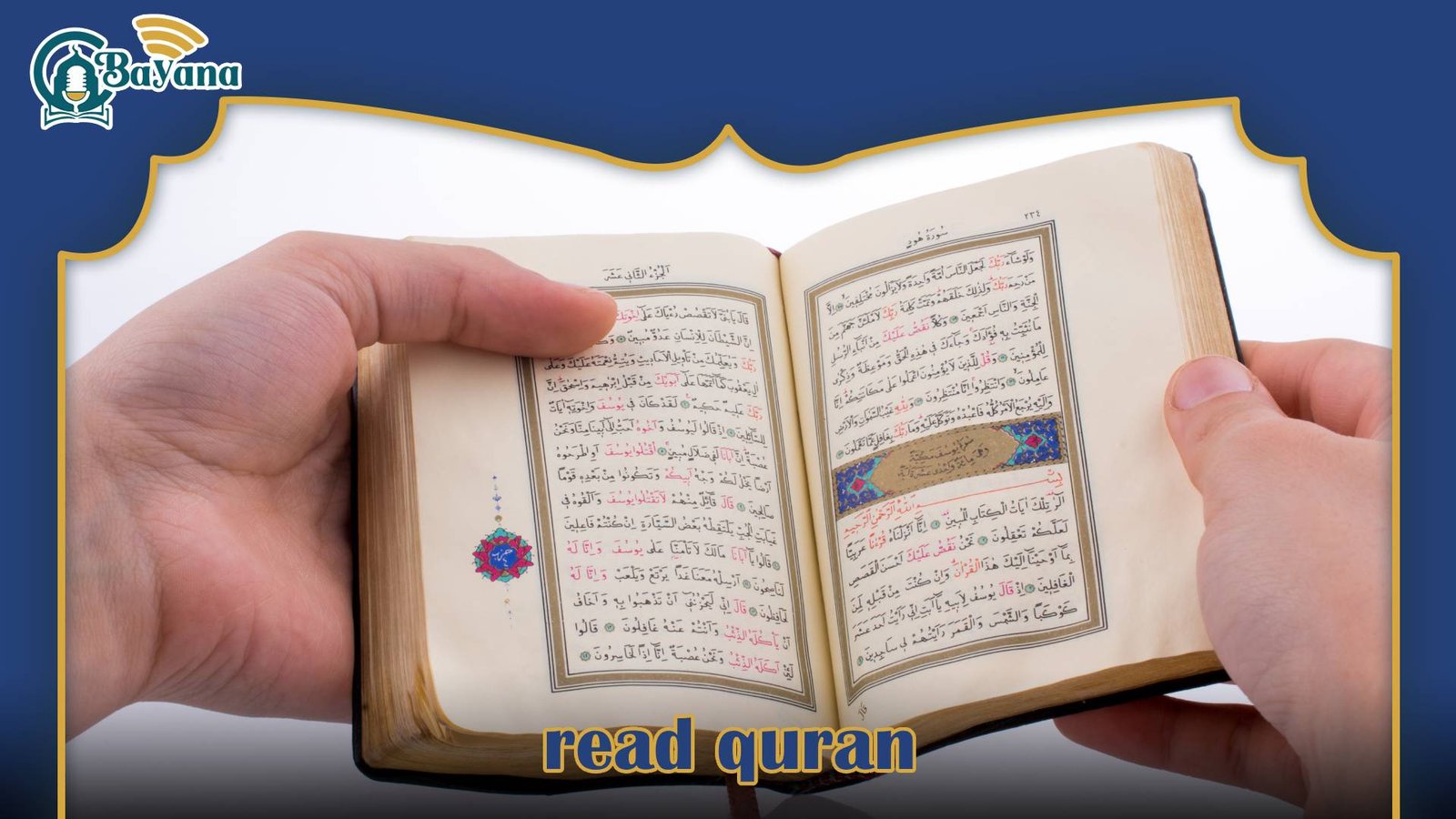
How to Read Quran Online with Tajweed 2025
Read Quran with Bayana Quran is a spiritual journey that connects Muslims to the words of Allah, offering guidance, peace, and wisdom for everyday life. The Quran is not just a book of recitation but a divine source of light that shapes character, strengthens faith, and provides answers to life’s challenges.
Whether read for daily reflection, deep study, or recitation in prayer, it nurtures the heart and mind with timeless lessons. In today’s digital world, people from all backgrounds have more opportunities than ever to read Quran conveniently online through platforms like Bayana Quran, making the holy text accessible to all who seek its blessings.
15 Benefits of Reading the Quran
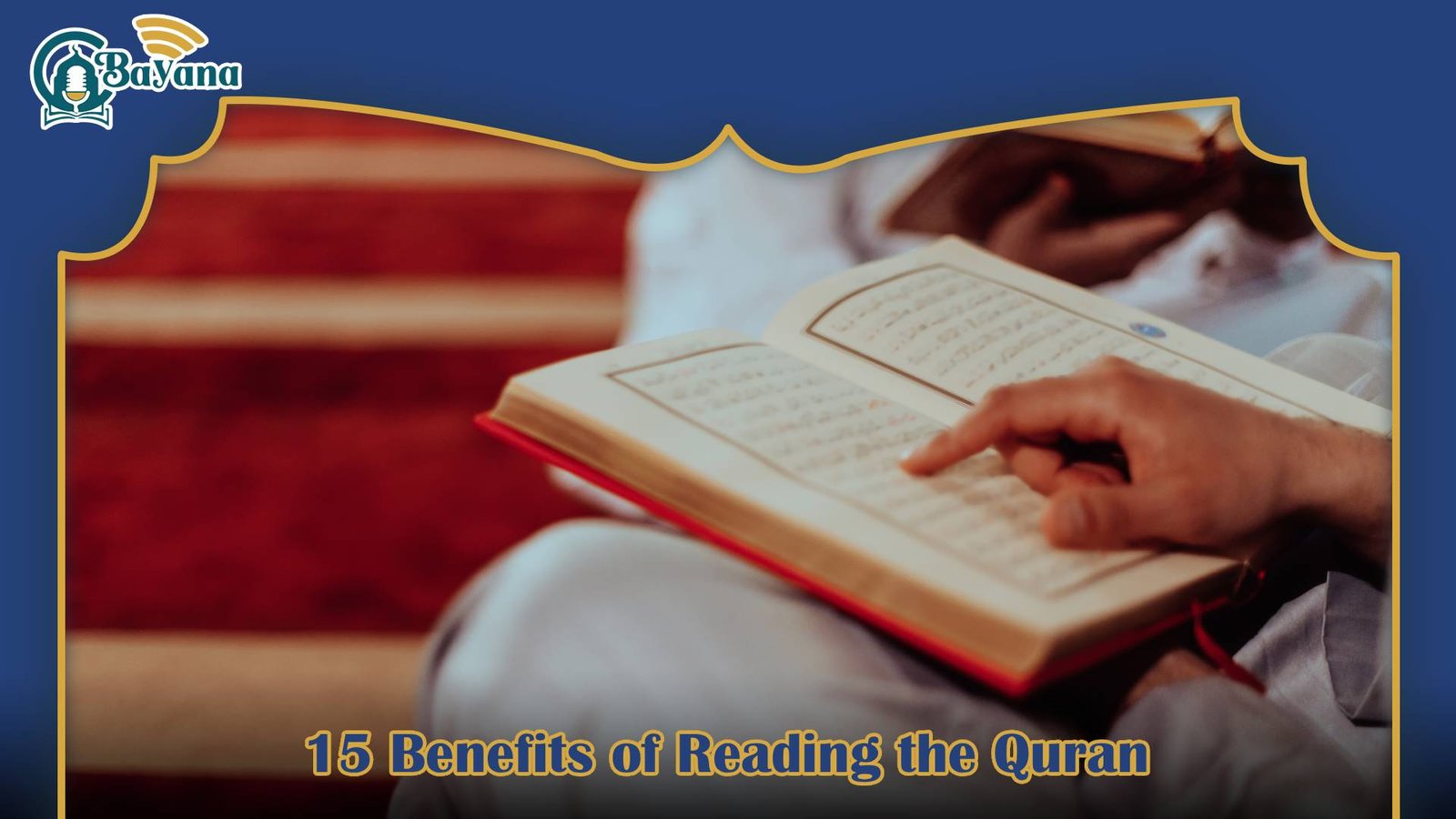
The Quran itself highlights countless blessings for those who choose to read Quran with sincerity and reflection. Below are fifteen powerful benefits, supported by verses from the holy text, that remind us why this act is so rewarding:
Reward: Every time you read Quran, you gain immense rewards. “Indeed, those who recite the Book of Allah and establish prayer and spend [in His cause]… can expect a profit that will never perish.” (Quran 35:29)
Guidance: The Quran serves as the ultimate guide for life. “This is the Book about which there is no doubt, a guidance for those conscious of Allah.” (Quran 2:2)
Peace: Reciting and reflecting brings calmness to the soul. “Unquestionably, by the remembrance of Allah hearts are assured.” (Quran 13:28)
Healing: When believers read Quran, they find healing for the heart, mind, and even body. “And We send down of the Quran that which is healing and mercy for the believers…” (Quran 17:82)
Knowledge: The Quran offers deep wisdom in history, science, and ethics. “Then We made the sperm-drop into a clinging clot… So blessed is Allah, the best of creators.” (Quran 23:14)
Protection: Verses provide spiritual protection from harm. “Say, ‘I seek refuge in the Lord of daybreak…’” (Quran 113:1-5)
Inspiration: To read Quran is to be reminded and inspired to become a better person. “Indeed in that is a reminder for whoever has a heart…” (Quran 50:37)
Unity: It promotes harmony and brotherhood among Muslims. “The believers are but brothers, so make peace between your brothers.” (Quran 49:10)
Remembrance: Reciting the Quran strengthens remembrance of Allah. “And recite to them the news of him to whom We gave [knowledge of] Our signs…” (Quran 7:175)
Reflection: The Quran calls for contemplation and deep thought. “Indeed, in the creation of the heavens and the earth… are signs for those of understanding.” (Quran 3:190)
Justice: Reading its verses nurtures fairness and justice. “Be just; that is nearer to righteousness.” (Quran 5:8)
Hope: When you read Quran, it revives hope in Allah’s mercy. “Never give up hope of Allah’s mercy…” (Quran 12:87)
Forgiveness: It reminds believers to forgive and seek forgiveness. “Would you not like that Allah should forgive you? And Allah is Forgiving and Merciful.” (Quran 24:22)
Love: The Quran teaches kindness, love, and compassion. “And do not forget kindness among yourselves…” (Quran 2:237)
Gratitude: Reading the Quran inspires gratitude toward Allah. “So remember Me; I will remember you. And be grateful to Me and do not deny Me.” (Quran 2:152)
Begin Your Quranic Journey with Bayana Quran
Strengthen your bond with the Holy Quran and enrich your understanding of Islamic teachings through Bayana Quran. Guided by experienced instructors, supported by flexible online sessions, and backed by a carefully designed curriculum, you’ll have the opportunity to learn at your own pace while staying rooted in authentic Islamic knowledge.
Start your journey today with Bayana Quran and experience a path of spiritual growth, deeper faith, and lifelong learning.

The Seven Types of Qirat in the Quran
When Muslims read Quran, they may come across different authentic recitation styles, known as Qirat. These Qirat fall under the Mutawatir category — a transmission so widely and independently reported that it leaves no room for doubt or error. The renowned Quranic scholar Abu Bakr ibn Mujahid selected the seven most prominent Qirat, each preserved by well-known Qaris who devoted their lives to ensuring its accuracy.
1. Qirat Naafi’ Al-Madani (Madinah)
This Qirat was widespread in Madinah and became the standard recitation for many scholars and believers in the region. It was the style most frequently used by Imam Malik (RA) and Imam Ahmad ibn Hanbal (RA). The recitation was preserved and passed down through the Qaris Qaloon and Warsh, both of whom played a significant role in safeguarding its authenticity. Today, Warsh’s narration is still very popular across North and West Africa, showing how this Qirat has stood the test of time.
2. Qirat Ibn Katheer Al-Makki (Makkah)
Originating from Makkah, this style was strongly associated with the holy city where the Quran was first revealed. Imam Shafi is among the great scholars who recited in this way, giving it even greater recognition. The Qaris Al-Buzzi and Qunbul were responsible for preserving and transmitting this recitation to future generations. Even now, when Muslims read Quran, they encounter traces of this beautiful style, which reflects the deep spiritual connection of the people of Makkah.
3. Qirat Abu Amr al-Basri (Basra)
Coming from the region of Basra, this Qirat became known for its clarity, smoothness, and distinctive style of articulation. It was carefully preserved by Ad-Doori and As-Soosi, two respected Qaris who ensured it remained a trusted recitation method. This style is still recognized today and is one of the respected ways Muslims can read Quran, highlighting the diversity of authentic recitations across the Islamic world.
4. Qirat Ibn Aamir ash-Shami (Syria)
The Qirat of Ibn Aamir spread widely in Syria, a land that played an important role in Islamic history and scholarship. Preserved by Ibn Dhakwan and Hisham, this recitation reflected the eloquence and precision valued by scholars of the region. Through their careful work, this style of recitation reached many generations, offering Muslims yet another way to read Quran while staying faithful to its revealed message.
5. Qirat Asim Al-Kufi (Kufa)
This is perhaps the most well-known Qirat in the modern world. It was highly respected by great scholars such as Imam Abu Hanifa (RA) and Imam Ahmad ibn Hanbal (RA). The recitation was preserved by two major Qaris, Hafs and Shuba, with Hafs’ transmission becoming the most widespread version today. In fact, the majority of Muslims across the globe who read Quran use Hafs’ narration, making this Qirat deeply familiar to believers everywhere.
6. Qirat Hamzah al-Kufi (Kufa)
Another recitation style from Kufa, this Qirat is known for its unique and careful pronunciation rules. It was preserved by the Qaris Khallad and Khalaf, who dedicated themselves to maintaining its purity. Khalaf later became recognized for his own Qirat, known as Qirat Khalaf al-Bazzar, further contributing to the richness of Quranic recitations. This demonstrates how the effort to preserve and read Quran in authentic ways was passed down with great dedication.
7. Qirat Al-Kisaa’i (Kufa)
The Qirat of Al-Kisaa’i was transmitted by Al-Layth and Ad-Doori, both of whom carried this style forward to future generations. It gained prominence in Kufa and beyond, known for its precision and distinctive characteristics. By safeguarding this Qirat, these Qaris ensured that Muslims had yet another authentic style in which to read Quran, emphasizing the diversity within unity that defines the Quranic tradition.
Learning to Read the Quran Correctly
Starting your Quranic journey is a spiritual commitment that requires patience, dedication, and the right resources. For beginners, the key is to take small, consistent steps and build a strong foundation over time.
A practical starting point is using Noorani Qaida or similar beginner-friendly books, which help learners understand the basics of how to read Quran Arabic. From there, focus on proper pronunciation and articulation, gradually moving towards short verses and simple surahs. This steady progress builds confidence and prepares students to read Quran with Tajweed, ensuring accuracy and beauty in recitation.
read more: tajweed for beginners
With the support of experienced tutors at Bayana Quran, students receive personalized guidance and feedback, making it easier to master each lesson before advancing. For those who prefer flexibility, it is now possible to read Quran online, giving learners access to quality instruction from anywhere. Additionally, many platforms allow students to read Quran free, removing barriers and making the holy book accessible to everyone.
Adopting a routine to read Quran daily further strengthens memory, improves fluency, and nurtures a deeper spiritual connection. This structured and gradual approach makes learning more effective and less overwhelming, helping learners progress confidently on their journey.
Learn more: learn quran tajweed online
Learn “Read Quran with Tajweed” Course, Bayana Quran
Bayana Quran makes it easier than ever for you or your children to read Quran with Tajweed from the comfort of home. Through one-to-one online sessions, highly qualified male and female tutors provide personalized guidance.
This course is designed to teach all the rules of Tajweed and the proper manners of articulation, helping learners pronounce every Harakah correctly with practical application.
Step by step, our expert teachers guide students from the basics of how to read Quran to mastering fluent recitation with Tajweed. Even beginners with no background in Arabic or Quranic studies can progress confidently and achieve accurate recitation.
Learning to Read Quran for All Ages by Quran Academy
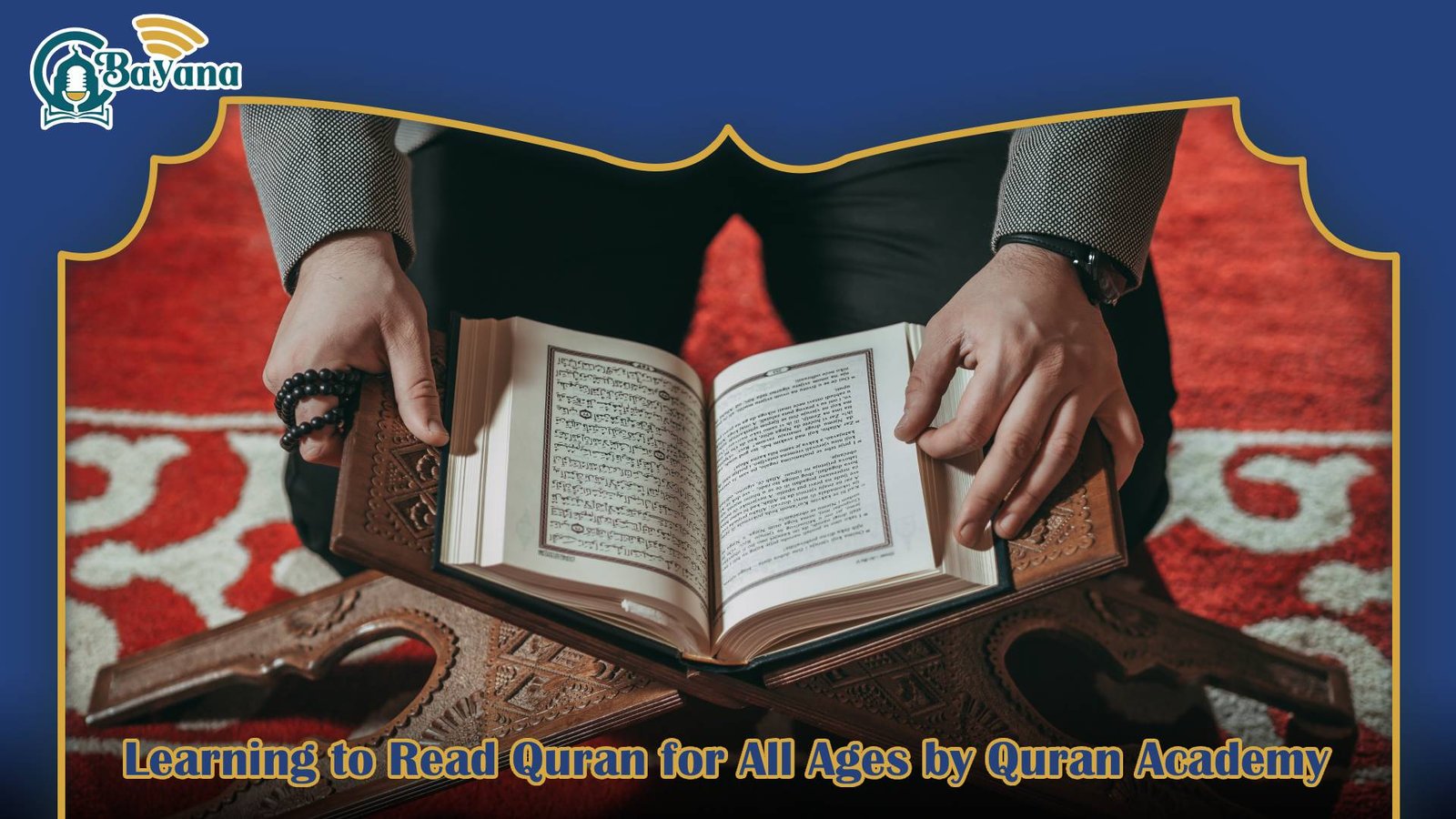
To read Quran correctly, beginners should start with the basics of Arabic, focusing on essential rules like waqf (pauses) and Sajdah (prostration marks). From there, they can gradually move on to short surahs and Tajweed to build fluency and confidence.
At Bayana Quran, learners of all ages—especially kids—benefit from structured lessons, interactive online classes, and personalized guidance. With expert tutors and a free trial option, students can easily begin their journey to read Quran with understanding and accuracy. Learning step by step makes the process simple and enjoyable, helping every student connect with the words of Allah in a meaningful way
Frequently Asked Questions
Many people have common questions when it comes to reading the Quran, such as how to start, whether they need to understand Arabic, and what the proper etiquette is while reading.
Why should Muslims read the Quran daily?
Reading the Quran every day helps strengthen faith, provides guidance for daily life, and brings inner peace. Can non-Arabic speakers read
the Quran in translation?
Yes, translations and tafsir (explanations) allow non-Arabic speakers to understand and reflect on the teachings of the Quran. What is the
read more: online tafseer course
best way to read the Quran online?
The best way is to use trusted online platforms or apps that offer authentic Quranic text, recitation, and translation, ensuring a convenient and meaningful reading experience.
In conclusion, Read Quran is a journey that transforms both the heart and the mind. By learning step by step, focusing on Tajweed, and practicing consistently, anyone can improve their recitation and strengthen their spiritual connection. With the right guidance and dedication, reading the Quran becomes not only easier but also more meaningful, allowing every believer to embrace the words of Allah with clarity and devotion.
Read also: quran study online