Follow Us

Quran Teaching: Effective Strategies for All Learners 2025
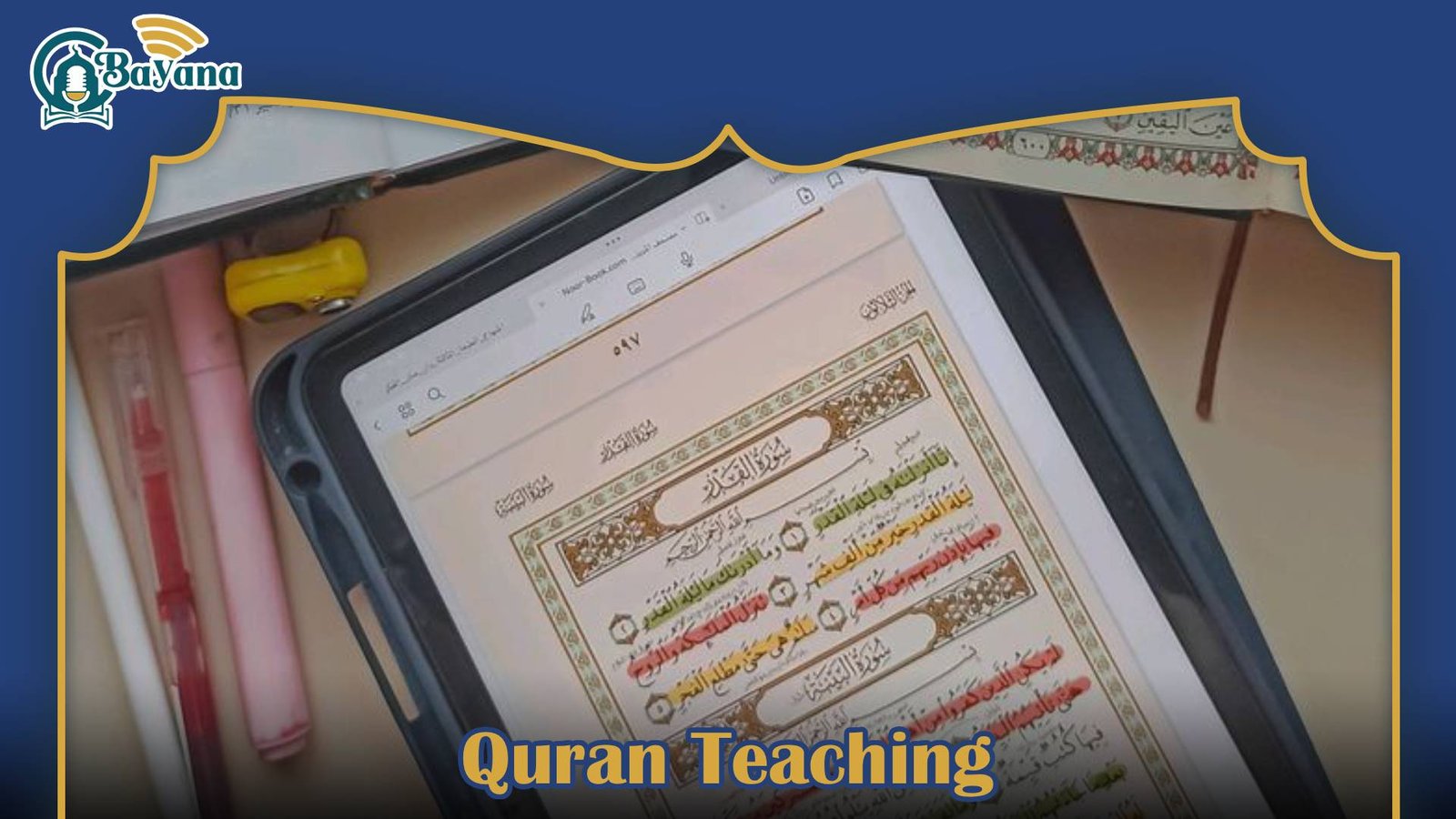
Quran Teaching is a vital academic discipline that plays a crucial role in preserving and conveying the spiritual, linguistic, and moral teachings of Islam. At institutions like Bayana Academy, Quran teaching combines traditional methods with modern educational practices to ensure that learners not only memorize the Quran but also deeply understand its meanings and applications.
Academic approaches emphasize critical thinking, cultural relevance, and effective communication to foster a holistic learning experience. In this article, we will explore key strategies and challenges associated with Quran teaching in contemporary settings.
The Role and Value of a Quran Teacher
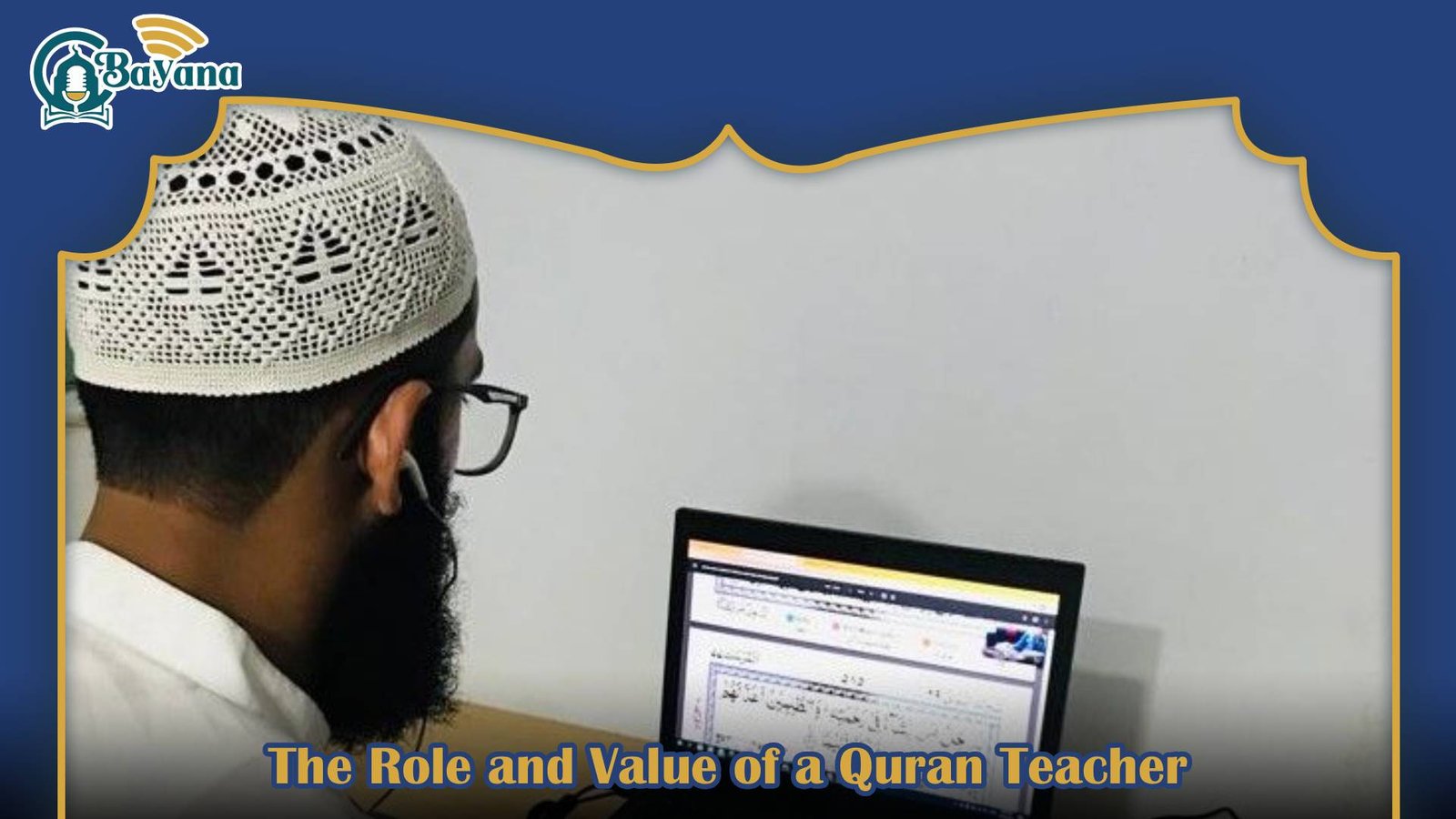
In the Islamic tradition, a Quran instructor holds a position of deep respect and responsibility. Far beyond a conventional educator, they are spiritual mentors, ethical guides, and role models. Their mission is not limited to teaching words, but extends to nurturing a meaningful connection between the learner and the Book of Allah.
1- Safeguarding the Quranic Legacy
Quran instructors play an essential role in preserving the sacred transmission of the Quran. Through their expertise, students learn to recite with accuracy and care, ensuring the authentic conveyance of its words from one generation to the next—an indispensable element in maintaining a sound and unwavering faith.
2- Mastery of Recitation and Pronunciation
Proper recitation, including the application of Tajweed (rules of pronunciation), is vital in Quranic learning. A skilled instructor provides detailed coaching, helping students articulate every letter and sound precisely, enhancing both the beauty and correctness of the recitation.
3- Insightful Understanding and Reflection
The Quran is a comprehensive guide for life, not a mere text to be memorized. Understanding its meanings, contexts, and relevance to daily challenges requires guidance.
A Quran instructor helps learners unpack the deeper layers of the verses, ensuring accurate comprehension—where even slight changes in pronunciation can alter meanings significantly.
4- Spiritual and Ethical Development
Beyond academic instruction, Quran teachers offer spiritual direction. They help students internalize the message of the Quran and apply it to their lives, cultivating character, mindfulness, and moral integrity according to Islamic teachings.
5- Consistency and Encouragement
Staying dedicated to Quranic study can be difficult without structure. A qualified instructor provides the discipline, support, and motivation needed to keep students focused and consistent in their learning journey.
6- A Supportive Learning Community
At Bayana Academy, students are not alone in their efforts. Under the guidance of a Quran instructor, they become part of a supportive community that uplifts one another. When one student feels discouraged, another steps in to motivate—creating a culture of collective perseverance toward a shared goal.
readalso: best online quran classes uk
Begin Your Quranic Journey with Bayana Quran
Strengthen your connection with the Holy Quran and deepen your understanding of Islamic teachings through Bayana Quran. We provide experienced instructors, interactive online classes, and a well-structured curriculum designed to offer a flexible and engaging learning experience rooted in authentic Islamic knowledge.
Start your spiritual journey today with Bayana Quran — a path of personal growth, renewed faith, and lifelong learning that will enrich both your worldly life and your hereafter.

How to Find a Good Quran Teacher: A Guide for Effective Quran Teaching
Finding the right instructor is a crucial step in any successful Quran learning journey. A qualified and experienced teacher can significantly enhance your understanding, pronunciation, and connection with the Quran. Whether you’re a beginner or seeking advanced Quran teaching, here are several practical steps to help you find a reliable and effective Quran teacher:
1. Ask for Recommendations
Begin your search by reaching out to trusted friends, family members, or members of your local mosque. Personal recommendations are often the most reliable way to find someone who excels in Quran teaching and has a proven track record.
2. Utilize Online Quran Teaching Platforms
With the rise of digital learning, many platforms now offer Quran teaching services online. These virtual classes connect students with certified instructors worldwide, making it easier than ever to learn from home at your own pace.
3. Visit Local Mosques and Islamic Centers
Most mosques and Islamic centers offer Quran teaching programs led by qualified teachers. These institutions often provide structured one-on-one or group classes tailored to various levels of proficiency.
4. Explore Dedicated Quran Schools
Many communities have institutions solely focused on Quran teaching. These schools typically employ experienced instructors and follow a comprehensive curriculum that includes Tajweed, memorization, and Tafsir.
5. Interview Potential Teachers
Once you’ve shortlisted a few candidates, take the time to speak with them. Ask about their teaching philosophy, years of experience, and the materials or curriculum they use. This step is key in finding someone whose Quran teaching style matches your learning preferences.
6. Verify Qualifications and Expertise
Ensure the teacher holds credible certifications and possesses deep knowledge of Tajweed (rules of recitation) and Tafsir (Quranic interpretation). Strong credentials are a sign of both competence and commitment to proper Quran teaching.
7. Request a Trial Lesson
Many Quran teachers offer a free or low-cost trial session. Use this opportunity to evaluate their teaching method, communication skills, and how comfortable you feel learning with them.
8. Review Costs and Scheduling
Before committing, discuss fees and class timings. A good Quran teaching experience depends not only on the instructor’s knowledge but also on whether the schedule and cost align with your lifestyle and budget.
9. Conduct Background Checks for Children’s Learning
If the Quran teaching is for a child, it’s especially important to check the teacher’s background or ask for references. This ensures a safe and trustworthy learning environment.
Whether you’re learning online or in person, choosing the right teacher makes all the difference. For structured and high-quality Quran teaching, Bayana Academy offers programs designed to meet the diverse needs of learners across all levels.
Read also: memorize the quran
The Importance of Understanding Learners in Quran Teaching
Effective Quran teaching begins with a deep understanding of the learners themselves. Each student comes with unique backgrounds, learning styles, and levels of familiarity with the Quranic text. By assessing these factors early on, educators can tailor their approach to meet individual needs, ensuring that no student is left behind.
Understanding the learner also includes acknowledging their emotional and spiritual development, especially for younger students or those new to Islamic education. When teachers invest time in identifying their students’ strengths, weaknesses, and preferred ways of learning—whether auditory, visual, or kinesthetic—they create a foundation for a more meaningful and personalized learning experience. This learner-centered approach also fosters a sense of trust and comfort, encouraging students to ask questions, participate actively, and engage more deeply with the Quran’s teachings.
Innovative and Interactive Approaches to Quran Education
Modern Quran education benefits greatly from the integration of innovative and interactive teaching strategies. Gone are the days when memorization was the only focus; today, educators are incorporating methods such as group discussions, role-play, storytelling, and critical thinking exercises to make Quran lessons more engaging and impactful.
Interactive tools help bring the Quran to life, allowing students to explore meanings, themes, and applications of the verses in their daily lives. In addition, the use of technology—like Quran apps, online classrooms, and digital resources—has revolutionized access to learning, especially for students in remote areas or those with different schedules.
These methods not only enhance understanding but also maintain students’ interest and motivation over time. Moreover, by encouraging student participation through presentations or debates, teachers help learners develop confidence and a deeper sense of ownership over their educational journey. Innovation in teaching, combined with traditional values, creates a balanced and enriching Quranic education.
Read also: quranic arabic language course
Building a Supportive and Inclusive Learning Environment
A positive and inclusive environment is essential for the success of any Quran class. When students feel safe, respected, and supported, they are more likely to thrive academically and spiritually. This environment begins with effective communication—clear instructions, respectful dialogue, and active listening from teachers foster a sense of belonging.
Teachers who build rapport with their students and show genuine care for their well-being create a space where learners can grow without fear of judgment or failure. Support also includes providing constructive feedback and regular assessments that help students understand their progress and areas for improvement.
Flexibility in teaching—such as adapting methods to suit different learning abilities or accommodating cultural diversity—ensures that every student feels valued. Encouraging creativity through art, music, or Quran-themed projects can also make the classroom more dynamic. Ultimately, a supportive learning environment does more than teach the Quran; it shapes confident, reflective individuals who carry Quranic values into every aspect of their lives.
In conclusion, Quran Teaching remains an essential part of Islamic education, blending tradition with innovation to nurture knowledgeable and thoughtful learners.
Read more: quran tajweed course
Frequently Asked Questions about Quran teaching
Below are some of the most frequently asked questions about Quran teaching, aimed at helping learners and educators gain more clarity and guidance.
How should I start learning the Quran?
If you’re new to the Quran, begin with the shorter Surahs at the end, as they’re easier to read and memorize. Surah Al-Fatihah is a key starting point.
What are the rewards and benefits of teaching the Quran?
Teaching the Quran is a deeply honorable act that nurtures personal spiritual growth while allowing you to share divine guidance with others. It carries immense rewards, both in this world and the Hereafter, as it helps preserve and spread the message of the Quran across generations.
How can one become a Quran teacher?
To become an effective Quran teacher, it is essential to strengthen your knowledge of Islam and its teachings. This can be achieved by enrolling in Islamic education programs, attending Quranic courses, and studying under qualified scholars to deepen your understanding of the Quran, its interpretation (Tafsir), and Islamic jurisprudence (Fiqh).
Institutions like Bayana Academy exemplify how academic rigor and modern techniques can come together to create an effective and engaging learning environment. By understanding learner needs, adopting interactive methods, and fostering a supportive atmosphere, Quran teaching can continue to inspire and guide future generations.
Learn more: learning quran for beginners