Follow Us

Master Quran Arabic Online for Better Understanding 2025
Quran Arabic is a language of profound significance and spiritual depth, One of the key methods for understanding this rich language is through Bayana Quran, an approach that emphasizes the linguistic, grammatical, and contextual elements of the Quranic text.
The unique structure and vocabulary of Quran Arabic hold deeper meanings that are essential for interpreting the divine message accurately. Bayana Quran aims to make these intricate aspects more accessible to both scholars and those seeking a deeper connection with the Quran. By studying the language in this context, individuals can unlock the timeless wisdom and spiritual guidance embedded in every verse of the Quran.
What is Quran Arabic?
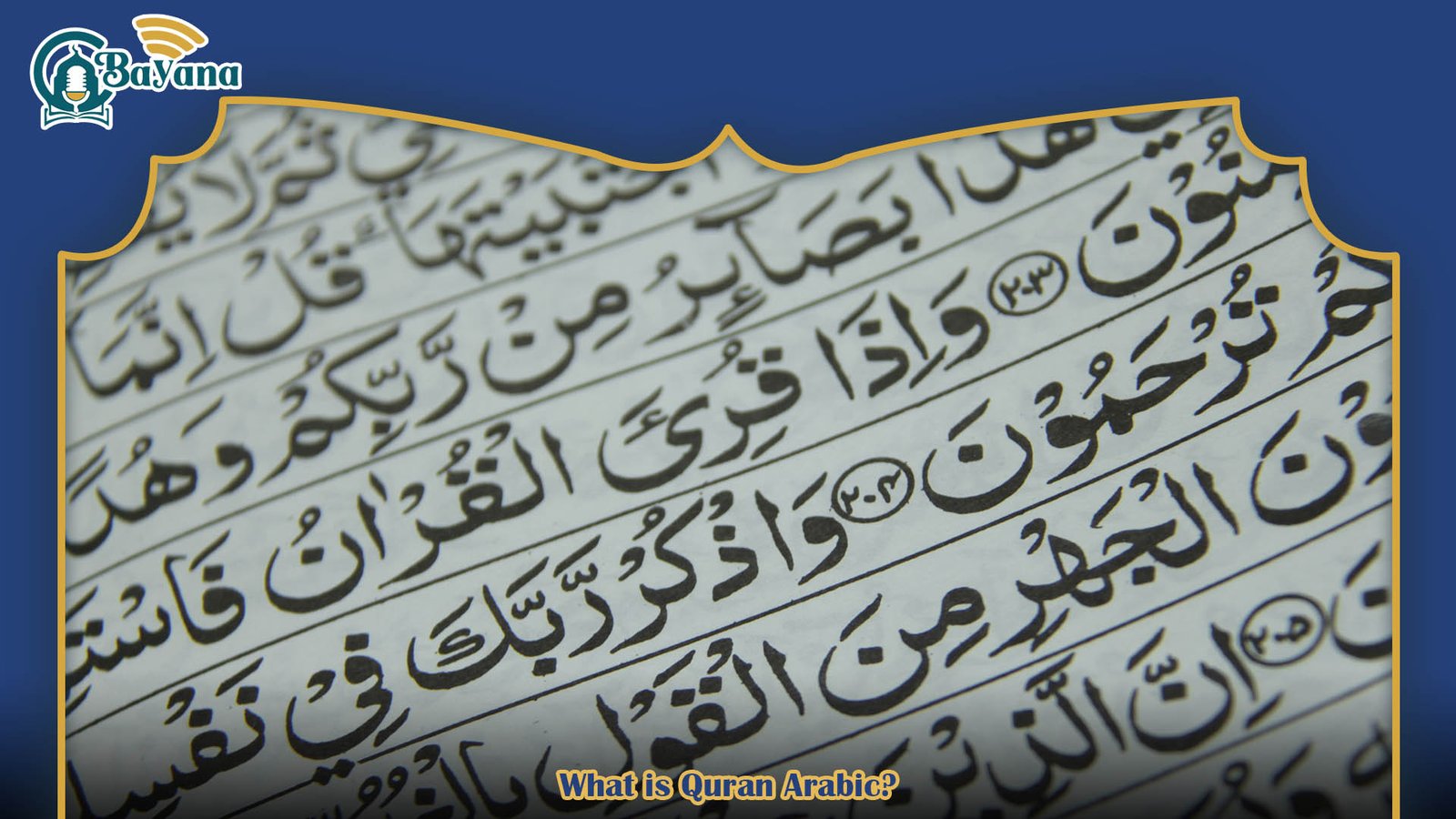
Quran Arabic refers to the form of Arabic in which the Quran, the holy book of Islam, is written. It is also known as Classical Arabic. Since the Quran was revealed in the 6th century A.D., the language used in the Quran differs somewhat from the modern Arabic spoken today.
Quran Arabic is based on the dialects of ancient Arab tribes, and while its sentence structure closely resembles that of Modern Standard Arabic, there are notable differences in vocabulary, context, and certain grammatical rules. The grammar and punctuation in Quranic Arabic also differ slightly from that of contemporary Arabic.
In Quran Arabic, special symbols are employed to guide pronunciation and emphasize specific words, such as pauses and stress. These symbols are primarily used for the oral recitation of the Quran. For most Arabic-speaking Muslims, learning Quran Arabic is part of early education, so they are familiar with both Quranic and Modern Standard Arabic. This dual familiarity enables them to understand and recite the Quran accurately while using modern Arabic in daily communication.
Embark on Your Quranic Journey with Bayana Quran
Deepen your connection with the Holy Quran and enhance your understanding of Islamic teachings with Bayana Quran. With guidance from qualified instructors, interactive online sessions, and a thoughtfully crafted curriculum, you’ll have the flexibility to learn at your own pace while staying grounded in authentic Islamic knowledge.
Begin your journey with Bayana Quran today and discover a path of spiritual growth, strengthened faith, and lifelong learning that will continue to benefit you.

The Differences Between MSA and Quran Arabic
The primary difference between Modern Standard Arabic (MSA) and Quran Arabic lies in their usage and presentation. Quran Arabic, also known as Classical Arabic, is more commonly found in literature, religious texts, and classical writings, while MSA is predominantly used in everyday speech and modern media. Though both forms of Arabic share many similarities, they also have distinct differences in vocabulary, grammar, and stylistic elements.
For most Arabic speakers, learning either one of these forms allows them to quickly adapt to the other due to their shared foundation. However, the decision of whether to study Quran Arabic or MSA largely depends on your personal goals for learning the language.
If your goal is to read, write, or develop a deeper understanding of the Quran, then studying Quran Arabic would be ideal. It allows you to engage with the sacred text in its original linguistic form, which carries specific meanings and nuances. On the other hand, if your focus is on communication, travel, or business in Arabic-speaking countries, then Modern Standard Arabic would be more practical, as it is widely understood across the Arab world and is used in news media, formal settings, and education.
Given that both forms of Arabic are quite similar, mastering one will make it much easier to learn the other. Becoming fluent in Arabic opens many doors, especially for those pursuing careers in fields such as political science, business, linguistics, and international relations. It not only enhances your professional prospects but also deepens your understanding of the Arab world and its rich cultural heritage.
Learn more: learn to read quran
5 Steps to Start Understanding Quran Arabic
Have you ever listened to a beautiful recitation of the Quran and felt a deep pull in your heart, as if there’s a world waiting for you to explore? You’re not alone. Many of us share that feeling. In this article, we’ll guide you through five essential steps to begin understanding Quran Arabic. These steps will help you unlock the rich layers of meaning in the Quranic text.
Step 1: Discover the Three Types of Arabic
Arabic is a layered language, and understanding the different types of Arabic is key to connecting with the Quran. Here’s a brief breakdown:
Spoken Arabic: This is the conversational language that varies across regions, from Morocco to Egypt to Syria.
Standard Arabic: Used in formal settings like news broadcasts, speeches, and written texts.
Classical Arabic: This is the preserved form of Arabic in which the Quran was revealed. It’s rich, complex, and poetic, carrying the Quran’s message in a way no translation can replicate.
To experience the Quran as it was meant to be understood, focusing on Classical Arabic is essential. Think of it as learning the language of a timeless masterpiece.
Step 2: Build a Foundation with Key Vocabulary
The journey to understanding Quran Arabic starts with building your vocabulary. Familiarizing yourself with key terms like “Allah” (God), “Ar-Rahman” (The Most Merciful), and “Al-Kitab” (The Book) is crucial. These foundational words will make each verse easier to understand, and over time, they will feel like old friends, guiding you through the text.
By learning high-frequency words, you’re essentially building a vocabulary toolbox that helps you connect with Quran Arabic, one word at a time.
Step 3: Learn the “Statuses” – Raf’a, Nasb, and Jarr
Arabic grammar is a powerful tool for unlocking deeper meanings. In English, word order tells us who’s doing what. In Arabic, the endings of words show their grammatical role:
Raf’a: The subject or “doer” of the action.
Nasb: The object or “receiver” of the action.
Jarr: Words that are “connected” to other words, often through possession or prepositions.
These grammatical statuses provide clarity on how words relate to each other, allowing you to uncover meanings that translations often miss. Once you grasp these, they’ll act as the building blocks that hold each verse together, enabling a deeper understanding.
Step 4: Understand “Heavy” and “Light” Sounds
Arabic has a unique feature: words can be classified as “heavy” or “light.” This distinction plays a significant role in understanding the word’s context and emphasis:
Heavy words: These end with a double sound, like “-un” or “-an.”
Light words: These omit the extra sound, adding emphasis or fitting certain grammatical structures.
Understanding this subtle difference is like learning the tone of a conversation—it adds depth and nuance. The more you listen to the Quran, the more you’ll notice how these sounds provide additional meaning, bringing the words to life.
Step 5: Master Flexibility in Arabic Words
One of the key features of Arabic is its flexibility, meaning that word endings change based on context. There are three main types of flexibility:
Fully Flexible: These words can show all three grammatical statuses depending on their role in the sentence.
Partly Flexible: Words like non-Arabic names or place names that don’t change their grammatical endings.
Non-Flexible: Words that stay the same in every context, such as proper nouns like “Musa” or “Isa.”
Understanding this flexibility helps you recognize patterns and how words interact in different contexts. When you’re able to identify these categories, you’ll be closer to understanding the Quran directly, without relying on translations.
Read also: islamic education
How to Learn Quran Arabic Online
Learning Quran Arabic online offers a structured and flexible way to master the language at your own pace. With expert instructors guiding you through the intricacies of grammar, vocabulary, and pronunciation, you’ll gain a deeper understanding of the sacred text. Online courses are designed to provide immersive learning experiences, including interactive lessons, quizzes, and exercises that cater to different learning styles.
You can practice your skills with native speakers, which helps you develop accurate pronunciation and recitation, especially when learning Arabic Tajweed. Many platforms also offer live sessions where you can get direct feedback from qualified teachers, ensuring you stay on track and make continuous progress.
Furthermore, online learning allows you to connect with a vibrant community of learners from around the world. This enables you to share insights, ask questions, and motivate each other as you all work towards understanding the Quran in its original language. Whether you’re a beginner or looking to refine your skills, online learning makes Quran Arabic accessible, flexible, and interactive, bringing you one step closer to reading and understanding the Quran with clarity and depth.
The Importance of Quran Arabic
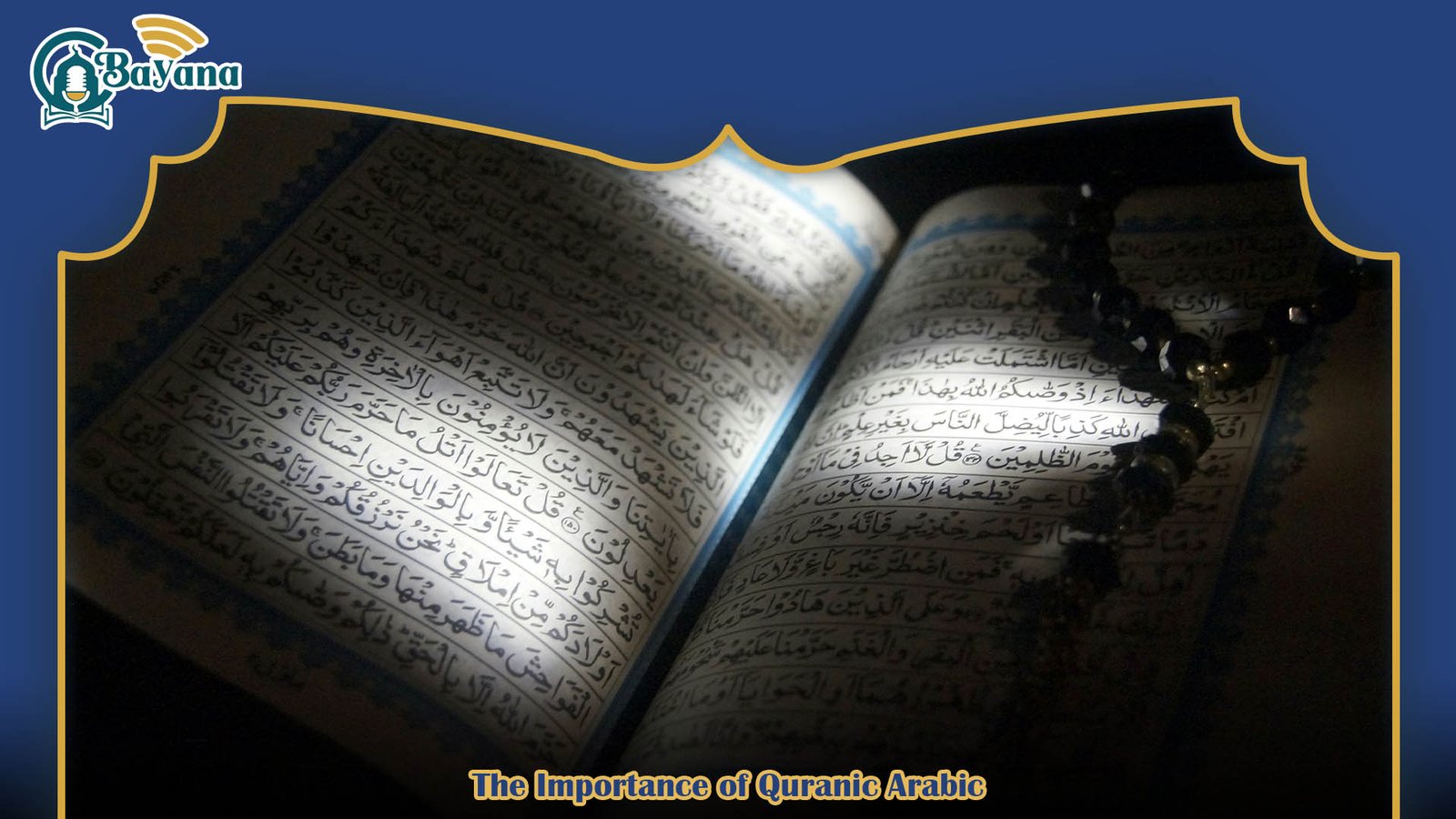
Quran Arabic is the original language of the Quran, featuring specific symbols that guide correct pronunciation and accentuate words, such as pauses between sentences. These symbols are primarily used in oral recitation, following the rules of Arabic Tajweed.
As the Quran states:
“Indeed, We have sent it down as an Arabic Quran that you might understand.”
(Surah Yusuf)
Certain words in Quran Arabic are unique and no longer used in Modern Standard Arabic, making it essential to learn Quran Arabic for accurate recitation and comprehension.
Learning Quran Arabic also allows you to experience the Quran’s spiritual depth. Arabic is a beautiful language, expressing profound meaning in the most spiritually significant way.
To fully understand the Quran’s message, it’s vital to learn its vocabulary, grammar, and pronunciation. Luckily, learning Quran Arabic online is more accessible than ever, with online courses offering flexibility and convenience.
With professional online tutors, you can focus on important aspects such as:
- Classical Arabic alphabet
- Quranic vocabulary
- Arabic pronunciation
- Classical Arabic writing
- Arabic grammar
Online lessons can guide you through the necessary steps to recite and understand the Quranic Arabic version with proper Tajweed and improve your Arabic skills from home.
Frequently Asked Questions
These are some of the most frequently asked questions about Quranic Arabic, which can help guide your learning.
What is Quranic Arabic?
Quranic Arabic is the classical form of Arabic in which the Quran was revealed. It differs from Modern Standard Arabic in terms of grammar, vocabulary, and pronunciation, preserving the original message of the Quran.
Why should I learn Quranic Arabic?
Learning Quranic Arabic allows you to understand the Quran in its original form, providing deeper insights into its meanings and teachings. It also enables you to recite the Quran accurately with the correct pronunciation and intonation.
Can I learn Quranic Arabic online?
Yes, there are many online courses available that offer structured lessons in Quranic Arabic, allowing you to learn at your own pace with the guidance of experienced teachers.
In Conclusion, Quran Arabic is more than just a language; it’s the key to unlocking the Quran’s divine message. Learning it allows us to engage with the text in its purest form, deepening our understanding and spiritual connection.
With online resources, interactive lessons, and expert guidance, mastering Quranic Arabic is now more accessible than ever, enhancing your Quranic knowledge and bringing you closer to its profound teachings.
Learn more: quran arabic lessons