Follow Us

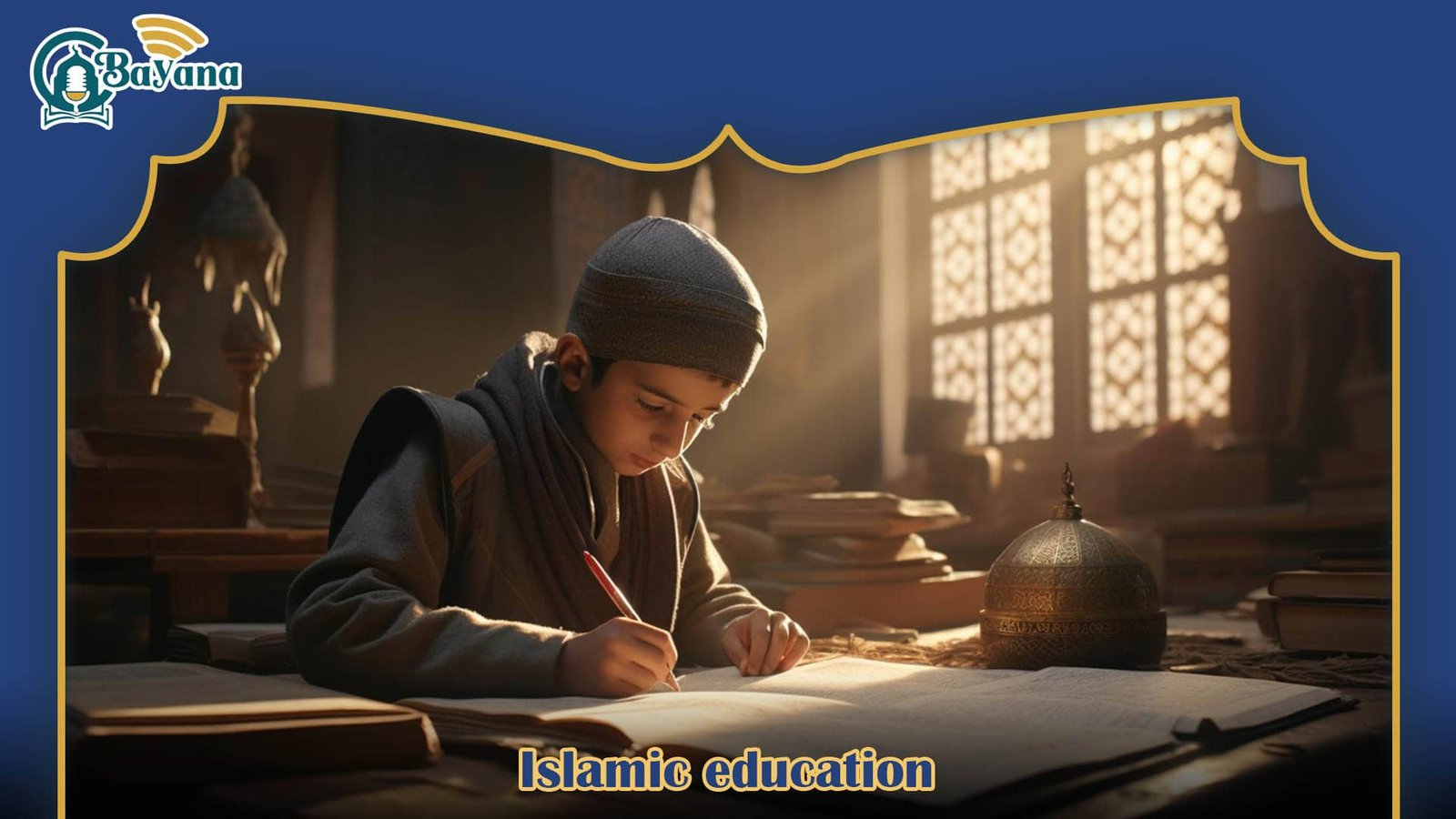
Islamic Education: Nurturing Faith and Knowledge 2025
Islamic education offered by Bayana Quran is a fundamental pillar in shaping individuals and societies, as it combines religious knowledge with worldly sciences to build a balanced personality capable of facing life’s challenges.
It is not limited to teaching acts of worship and Islamic rulings, but rather represents a comprehensive system that instills values, morals, and conscious thinking while nurturing generations on principles of justice, mercy, and righteous action. Through Islamic education, the Ummah preserves its identity and achieves progress built on a strong foundation that unites faith and knowledge.
The Importance of Islamic Education
Islamic education is far more than the study of religious texts; it is a comprehensive system that nurtures purpose, moral responsibility, and a strong spiritual identity. In Islam, the pursuit of knowledge is regarded as an act of worship, with the Qur’an and Hadith emphasizing its importance and virtue. Thus, Islamic education not only focuses on understanding Islamic teachings but also on cultivating noble character traits such as compassion, honesty, and justice.
In the UK, where Muslims form a vital part of society, Islamic education plays a crucial role in connecting younger generations with their faith and cultural heritage. Amid growing secular influences and integration challenges, Islamic schools and madrasas provide a supportive environment where children can develop a confident sense of identity while also excelling academically. This balanced approach—combining religious grounding with academic achievement—equips students to thrive both in their personal lives and in diverse professional and social roles.
Begin Your Quranic Journey with Bayana Quran
Are you seeking to deepen your connection with the Quran and enhance your understanding of Islamic teachings? Bayana Quran is here to support you every step of the way. With qualified instructors, flexible online classes, and a well-structured curriculum, you can learn at your own pace while staying rooted in authentic Islamic knowledge.
Don’t wait—enroll with Bayana Quran today and take your first step toward spiritual growth and lifelong learning.

Empowering the Future: Islamic Education in the UK
Islamic education has always been a fundamental pillar in shaping individuals and strengthening communities within Muslim societies. At its core, it seeks to nurture both the mind and the soul, fostering spiritual values and ethical principles alongside academic excellence. In the United Kingdom, a country known for its cultural and religious diversity, Islamic education continues to play a vital role in preparing the next generation of Muslims. Through madrasas, Islamic schools, and specialized educational initiatives, the Muslim community is ensuring that young people develop the knowledge and moral grounding needed to thrive in modern society while remaining firmly connected to their faith.
Islamic Education in the Digital Age
With the rapid advancement of technology, Islamic Education in the UK is undergoing a significant transformation. Digital platforms and online resources are now complementing traditional methods of learning, making knowledge more accessible than ever. From Qur’an apps and virtual madrasas to structured online courses, technology is opening new doors for students of all ages.
For many Muslim families who lack access to a local madrasa or Islamic school, these online solutions provide a vital alternative. Learners can now study Qur’an recitation, Hadith, and other Islamic subjects from home while benefiting from flexible schedules that suit both students and working parents.
The shift toward digital learning accelerated during the COVID-19 pandemic, and even after schools and madrasas reopened, many continued to integrate online tools into their teaching. This hybrid model of Islamic Education not only ensures continuity but also creates personalized and adaptable learning experiences, making it a lasting feature of the modern educational landscape.
Read also: Learn Quranic Arabic Online
Islamic Schools: Balancing Faith and Academic Excellence
In addition to madrasas, full-time Islamic schools have become a preferred choice for many Muslim families in the UK. These institutions provide a balanced curriculum that combines secular subjects with Islamic Education, allowing students to excel academically while staying rooted in their faith. What makes these schools appealing is their ability to create an environment where children can practice Islam confidently and receive a high-quality education at the same time.
Many Islamic schools in the UK consistently achieve strong academic results, often surpassing national averages in subjects such as mathematics, science, and English. Alongside this, they embed Islamic values into daily life, encouraging students to embrace ethics, compassion, charity, and community service. For parents, these schools offer reassurance that their children are being taught in a setting that reflects both their cultural and religious identity, helping them avoid potential conflicts in secular education.
The long-term success of Islamic schools relies on their ability to uphold high academic standards while remaining true to their spiritual mission. Although some face challenges in balancing the UK’s national curriculum with Islamic Education requirements, many institutions have developed innovative methods to integrate both. This ensures that students graduate with a well-rounded education, fully prepared to contribute positively to both the Muslim community and the wider British society.
The Importance of the Quran and Hadith in Islamic Education
The Qur’an and Hadith represent the primary sources of Islamic knowledge and have always been at the heart of Islamic education. The Qur’an is regarded as the divine word of God revealed to the Prophet Muhammad (peace be upon him), while the Hadith encompass his sayings, actions, and approvals. Together, they serve as the essential foundation for nurturing the spiritual, moral, and intellectual growth of Muslims.
Throughout history, scholars have dedicated themselves to the study and interpretation of the Qur’an and Hadith, which gave rise to a wide range of Islamic sciences such as jurisprudence, theology, and philosophy. These disciplines have provided Muslims with the tools to comprehend, practice, and integrate Islamic teachings into every aspect of their daily lives.
Islamic Jurisprudence [FIQH]
Islamic jurisprudence, or Fiqh, refers to the process through which jurists derive a set of guidelines, rules, and regulations—collectively known as Shari’ah—based on the principles of the Qur’an and the Sunnah (the sayings, actions, and approvals of Prophet Muhammad, as recorded in the Hadith). Over the centuries, successive generations of scholars have elaborated and refined these rules through interpretation, analogy, consensus, and disciplined academic research.
While the foundational principles of the Qur’an and Sunnah are unchanging, Islamic jurisprudence provides a dynamic framework that allows humans to apply these principles to their daily lives, interactions, and societal dealings.
The universality and enduring nature of Islam as a civilization are closely tied to the general principles and guidelines established by the Qur’an and Sunnah. These principles enable Muslims to develop practical solutions that address the evolving circumstances of their communities. In addition to the Qur’an and Sunnah, other key sources of Islamic law include qiyas (analogical reasoning), ijma’ (scholarly consensus), and ijtihad (rigorous academic interpretation and research).
Learn more: Quran Tajweed Online
The Importance of Aqidah in Islamic Education
Aqidah, or Islamic creed, forms the foundational framework of a Muslim’s belief system and plays a central role in Islamic Education. It serves as a compass, guiding believers on their spiritual journey and helping them distinguish right from wrong in accordance with divine guidance.
By studying Aqidah, Muslims gain a deeper understanding of the nature of Allah, His infinite mercy, wisdom, and the purpose of His guidance. This knowledge strengthens their faith, cultivates a sense of accountability, and encourages ethical conduct in all aspects of life.
Furthermore, a firm grasp of Aqidah fosters resilience against misconceptions, doubts, and external influences that may challenge a believer’s faith. It helps individuals develop a strong spiritual foundation, leading to sincere devotion, inner peace, and a harmonious relationship with both Allah and the broader community.
Ultimately, integrating Aqidah into Islamic Education ensures that learning is not merely academic but deeply connected to spiritual growth, moral development, and a meaningful, purposeful life guided by the principles of Islam.
Challenges Facing Islamic Education
Despite ongoing socio-political tensions between the Islamic and Western worlds, many Muslims continue to adopt patterns of thought and practice shaped by Western modernity. Since the period following World War II, when Muslim societies began gaining partial independence from colonial rule, much of the discourse on education has focused on achieving empowerment within the framework of the modernist world system. However, there remains limited awareness that modernity, and the knowledge structures it promotes, are deeply rooted in Western culture and society.
In addition to the visible curricular and methodological challenges of adopting Western educational models, significant political implications arise when Western education is viewed as a system of interconnected norms and loyalties. As Islamic Education increasingly draws from these models, it risks becoming subject to their underlying normative structures. Yet, while Western education seeks to foster allegiance to the principles of modernity, Islam itself has established its own enduring framework of values, thought, and action. Upholding these Islamic norms provides the foundation for a coherent social, political, and economic system that preserves the identity and integrity of Muslim communities.
in concolsion ,Islamic Education remains a vital cornerstone for nurturing both knowledge and character in individuals. By integrating Aqeedah (creed), Fiqh, Islamic ethics, history, and Islamic philosophy, it provides a holistic approach that shapes well-rounded, morally conscious, and intellectually capable generations.
In today’s rapidly changing world, Islamic education not only preserves faith and cultural identity but also equips students with the tools to excel academically, contribute positively to society, and face future challenges with confidence and integrity.
Read more: Quran Classes