Follow Us

Discover the Best Children’s Quran Classes Online
Children’s Quran learning is made easy and engaging at BayanaQuran, where young learners embark on a meaningful journey to connect with the Quran.
BayanaQuran offers a nurturing environment designed to help children build strong foundations in Quranic knowledge, tajweed, and Islamic values through interactive and flexible courses tailored to their needs.
Easy Quran Learning for Kids Building a Strong Foundation
Learning the Children’s Quran is made easy through a well-structured path that helps children of all ages start their journey confidently.
The Children’s Quran curriculum supports learners from the basics of the Arabic alphabet to advanced recitation and memorization.
With a focus on building fluency and confidence, the Children’s Quran provides engaging and child-friendly lessons rooted in authentic principles. Teachers skilled in working with children use interactive methods to make the Children’s Quran learning process enjoyable.
By combining Islamic teachings with modern technology, the Children’s Quran ensures children stay motivated and connected from the start. This approach makes learning the Children’s Quran accessible and effective, helping children develop a lasting love for the Quran.
Begin Your Quranic Journey with Bayana Quran
Enhance your connection with the Holy Quran and expand your knowledge of Islamic teachings through Bayana Quran. Our experienced instructors, interactive online classes, and thoughtfully designed curriculum offer a flexible and engaging learning experience rooted in authentic Islamic guidance.
Start your spiritual journey today with Bayana Quran—a pathway to personal growth, strengthened faith, and lifelong learning that enriches both your worldly life and your hereafter.

Flexible Learning Schedules Tailored to Your Child’s Life
One of the best features of the Children’s Quran program is its flexibility, designed to fit busy family lives.
The Children’s Quran offers multiple class times so children can learn after school, on weekends, or during holidays without pressure.
Classes are conducted online by certified instructors who provide personalized attention, ensuring that each child progresses comfortably in their Children’s Quran studies.
This flexible system makes the Children’s Quran accessible to children worldwide, allowing consistent learning without interrupting daily routines.
Families appreciate how the Children’s Quran adapts to their schedules while maintaining steady progress in Quranic education.
Learn Anywhere Interactive Quran Classes from Home
Thanks to digital innovation, the Children’s Quran program brings Quran lessons directly into homes worldwide.
Whether in Muslim-majority countries or abroad, children can access live Children’s Quran classes with just an internet connection.
These interactive sessions offer real-time feedback from teachers and use multimedia resources to keep children engaged.
The Children’s Quran online format supports learning anywhere, encouraging children to stay motivated and connected to their Islamic education.
This approach to the Children’s Quran makes it possible for every child to learn Quranic knowledge regardless of their location.
Why the Children’s Quran Matters
Early exposure to the Children’s Quran shapes a child’s faith, values, and identity.
Through the Children’s Quran, children develop a strong spiritual connection with Allah and learn to live by Islamic teachings such as kindness, honesty, patience, and humility.
The Children’s Quran teaches children about the purpose of life, the importance of prayer, and submission to Allah’s will.
Learning the Children’s Quran from a young age nurtures responsibility and love for Islam, creating confident and grounded young Muslims who carry these values throughout their lives.
learn more: quran teaching
Learn to Recite with Tajweed: Clear, Beautiful, and Correct
Tajweed—the art of precise Qur’anic recitation—is a vital part of any child’s learning journey. Through carefully structured lessons, young students are guided step by step to pronounce every letter exactly as it was revealed.
They become familiar with articulation points, rules of elongation, proper pauses, and the natural rhythm of recitation, all of which enhance their ability to read the Qur’an with clarity and beauty.
By practicing tajweed, children not only improve the quality of their recitation but also develop a deeper respect for the Qur’an and its sacred message. This process nurtures reverence, attentiveness, and love for Allah’s words, ensuring that reading the Qur’an becomes both a spiritual and uplifting experience.
Ultimately, tajweed equips children with the skills to recite correctly and gracefully, honoring the holy text while strengthening their bond with it.
Cognitive and Language Benefits of the Children’s Quran
Beyond spiritual growth, the Children’s Quran supports cognitive development and language skills. Memorizing verses from the Children’s Quran enhances memory, concentration, and discipline—skills valuable in all areas of learning.
The rich Arabic vocabulary found in the Children’s Quran improves language comprehension and pronunciation. For non-Arabic speakers, studying the Children’s Quran offers insights into Islamic terms and expressions.
This holistic approach makes the Children’s Quran a meaningful investment in a child’s intellectual and spiritual future.
Practical Tips for Learning the Children’s Quran with Tajweed at Home
Success in learning the Children’s Quran with tajweed at home requires consistency and the right resources. Setting a daily routine, even with short sessions, helps children steadily improve their Children’s Quran recitation.
Starting with simple verses and focusing on correct pronunciation through visual aids or apps supports mastery of the Children’s Quran.
Listening to expert reciters and joining virtual Quran circles can motivate children during their Children’s Quran journey. Finding qualified tutors or online courses further reinforces learning. Regular review of tajweed rules through the Children’s Quran is key to progress.
read more: quran study online
Strengthening Islamic and Cultural Identity Through the Children’s Quran
Learning the Qur’an from a young age is one of the most effective ways to connect children to their Islamic heritage and strengthen their sense of identity, even if they are not yet fluent in Arabic.
With the help of reliable translations and simplified explanations, young learners can easily grasp the meanings of verses and understand the timeless lessons they carry.
This approach allows children to form an emotional attachment to the Qur’an, making it not just a book they read, but a source of comfort, guidance, and inspiration.
Through these lessons, children are encouraged to reflect on key Islamic values such as honesty, kindness, patience, and respect. They also begin to appreciate the traditions of their faith, fostering a sense of pride and belonging within the Muslim community.
Starting Qur’anic education early builds a strong foundation for spirituality that grows with them into adulthood. In turn, this shapes young Muslims who not only live by their faith but also contribute positively to the world around them.
What Your Child Will Learn in a Children’s Quran Course
Enrolling your child in a Qur’an course opens the door to countless opportunities for both learning and spiritual growth.
The structured curriculum not only helps children memorize verses and, for some, achieve the honorable goal of becoming Hafiz, but also allows them to experience the joy of connecting with Allah’s words. Along the way, they gain immense spiritual rewards while strengthening their bond with their faith.
A central focus of these programs is tajweed, which ensures that children recite the Qur’an with accuracy, clarity, and beauty. They are also introduced to the foundations of the Arabic language—reading, writing, and speaking—so that their understanding goes beyond recitation and moves toward comprehension.
In addition, students explore the meanings and significance of selected surahs, gradually uncovering the deeper lessons each chapter carries. Alongside this, they learn dhikr, prayer, supplication, and inspiring stories of the Prophets, which nurture their hearts and guide their daily lives.
Courses also emphasize the etiquette of reciting the Qur’an, instilling respect and reverence in young learners. Altogether, this holistic approach ensures that children not only study the Qur’an but also grow to love it, carrying its values with them as a lifelong source of guidance.
learn more: quran lessons
Islamic Stories in the Children’s Quran
Stories play a central role in helping children connect with the Qur’an and its timeless guidance. Through engaging narratives such as the story of Adam and Hawaa or the journey of Prophet Moosa, young readers are introduced to Islamic teachings in a way that is simple, relatable, and age-appropriate.
These stories highlight moral lessons, the wisdom of Allah, and the values of kindness, patience, and gratitude.
By learning through storytelling, children not only absorb knowledge but also build an emotional connection with their faith. The gentle approach ensures that children are inspired rather than frightened, allowing them to see the Qur’an as a source of comfort and guidance.
Parents and educators often choose these narratives to nurture spiritual growth, encourage reflection on forgiveness and trust in Allah, and develop the habit of prayer.
In this way, Qur’anic stories become more than just tales—they serve as stepping stones that make learning Islam both meaningful and enjoyable for children.
The Story of Prophet Nuh in the Children’s Quran
The story of Prophet Nuh (Noah, peace be upon him) is one of the most powerful and inspiring lessons for young Muslims. It reflects themes of patience, resilience, and unwavering faith in Allah.
Prophet Nuh spent centuries calling his people to worship the one true God, remaining steadfast despite their constant rejection and mockery. His perseverance shows children that true strength lies in holding firmly to the truth, even when it is difficult.
When the great flood came, the ark became a symbol of safety, faith, and Allah’s boundless mercy. It teaches children that obedience to Allah leads to protection and blessings, while disobedience brings consequences.
The story also reminds them of the importance of repentance, showing that turning back to Allah is always possible before it’s too late.
Through such narratives, kids learn to trust Allah’s wisdom and understand His justice and compassion. Parents often share this story to instill values of obedience, humility, and gratitude, helping children see how faith can guide them through challenges.
Beyond its historical details, the story of Prophet Nuh encourages reflection, strengthens spiritual growth, and builds a foundation of strong Islamic values that children can carry throughout their lives.
The Story of Prophet Sulaiman and the Talking Ants in the Children’s Quran
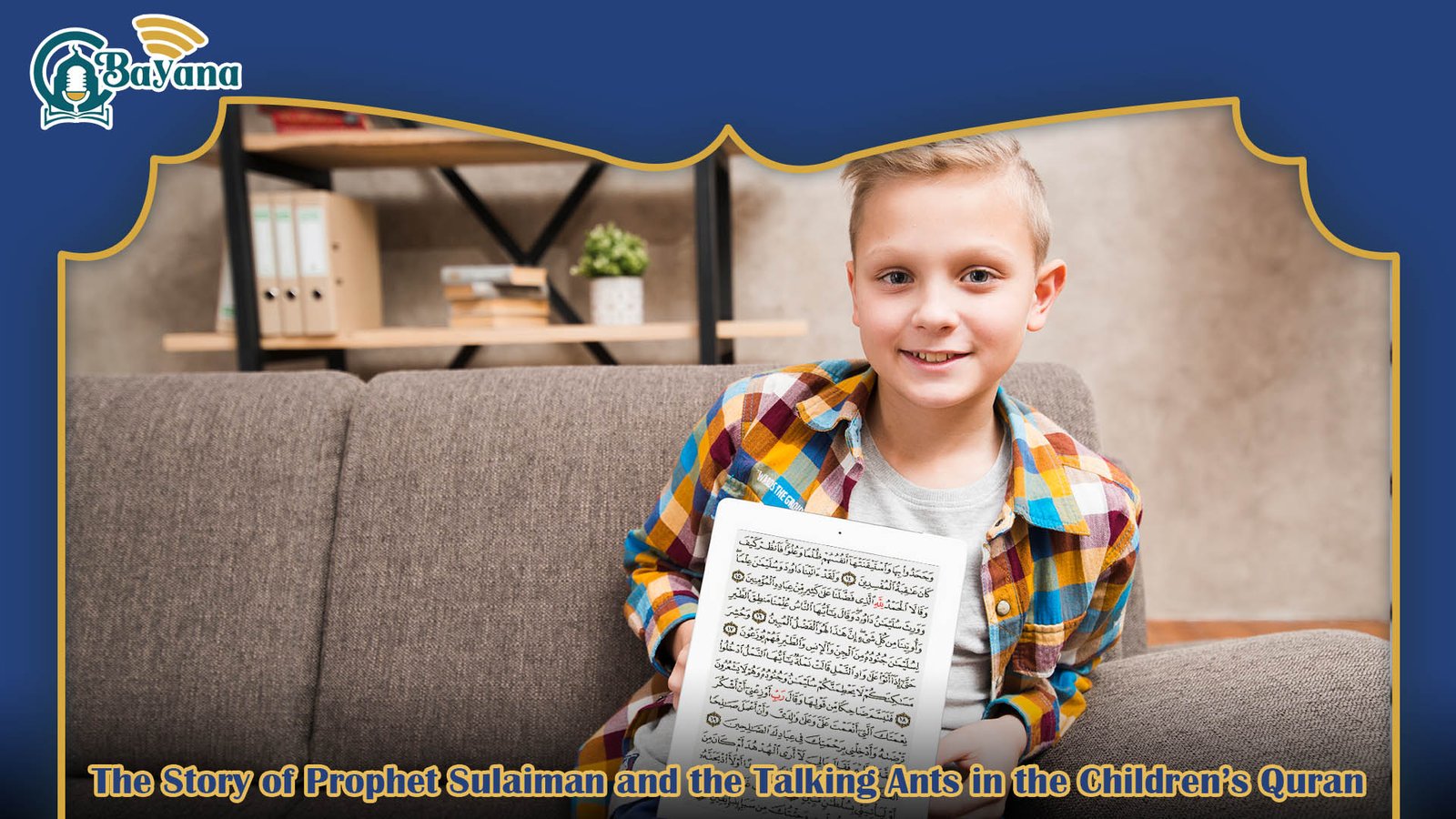
In the story of Prophet Sulaiman and the talking ants, we see a beautiful example of wisdom and compassion. Prophet Sulaiman, who was blessed with the ability to understand the language of animals, once led an army of humans, jinn, and birds through a valley. There, a small ant called out to its community, urging them to retreat into their homes so they would not be crushed by the mighty army passing by.
This simple yet profound moment reflects Sulaiman’s deep appreciation for even the smallest of Allah’s creations. It teaches children the importance of awareness, empathy, and respect for all living beings, no matter how tiny they may seem.
When young readers explore such stories, they gain not only knowledge but also values—kindness, humility, and gratitude. These timeless lessons nurture a child’s heart, guiding them to grow with compassion and a sense of responsibility toward the world around them.
By engaging with these narratives, kids build a stronger emotional bond with the Qur’an while learning that mercy and gentleness are qualities loved by Allah.
Frequently Asked Questions About the Children’s Quran
Here are some common questions and answers to help parents and young learners understand the benefits of the Children’s Quran.
What is the Children’s Quran?
The Children’s Quran is a version of the Qur’an designed for young readers. It presents verses, stories, and lessons in a way that is simple, engaging, and easy for children to understand.
At what age can children start learning the Children’s Quran?
Children can start learning at a very young age, often from 3–4 years old, depending on their interest and readiness. Courses are usually structured to gradually introduce reading, memorization, and comprehension.
How does the Children’s Quran help with memorization and understanding?
It combines clear explanations, simplified language, and storytelling to make memorization easier. Children also learn the meanings of verses and the moral lessons behind them, which strengthens both knowledge and faith.
Can children learn tajweed through the Children’s Quran?
Yes, many programs include tajweed instruction, teaching correct pronunciation and recitation rules while keeping the learning process fun and interactive.
read also: quran classes
In conclusion, mastering the children’s Quran at BayanaQuran equips young learners with not only Quranic knowledge but also lifelong spiritual values.
BayanaQuran’s dedicated approach ensures each child develops a deep love and understanding of the Quran, fostering faith, confidence, and respect that will guide them throughout their lives.