Follow Us

Quran Tajweed: A Guide to Correct Quran Recitation 2025
Quran Tajweed, as taught by Bayana Quran, is the art of reciting the Holy Quran with precision, beauty, and correct pronunciation, following the method of the Prophet Muhammad (PBUH). It involves mastering the rules that dictate how each letter and word should be articulated, preserving the true meaning of Allah’s words without alteration.
More than just a linguistic discipline, Tajweed is a spiritual journey that deepens the reader’s connection to the divine message, fostering both understanding and devotion. Through learning Tajweed, Muslims honor the sanctity of the Quran and draw closer to Allah.
What Does Tajweed Mean?
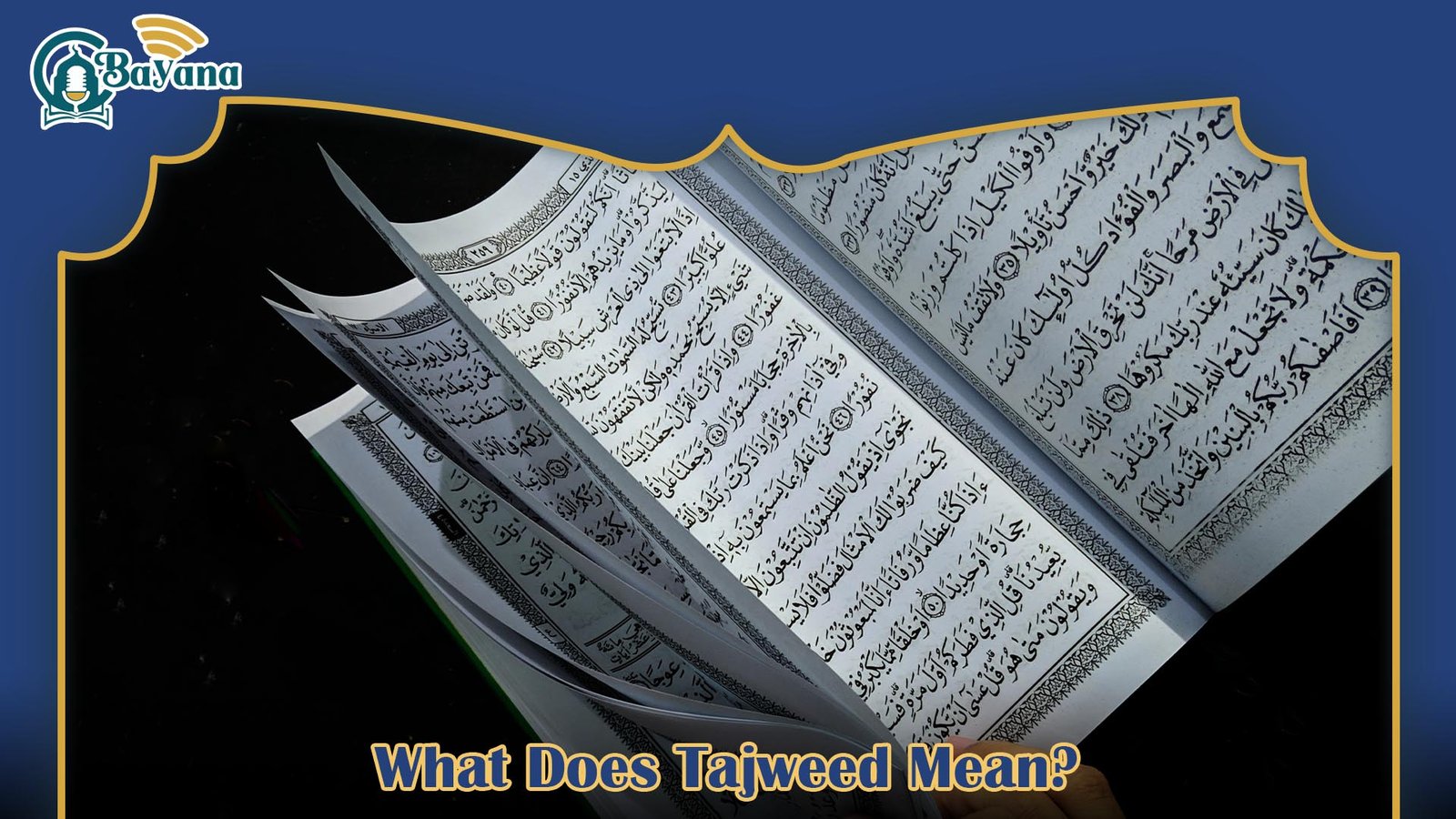
The term “Tajweed” (تَجْوِيد) is derived from the Arabic root “j-w-d” (ج-و-د), which means to “make something excellent” or to “enhance.” In the context of the Quran, Tajweed refers to the set of rules that govern the correct pronunciation and articulation of Quranic letters and words. These guidelines ensure that every sound is pronounced accurately, preserving both the precision and beauty of the Quranic text.
Tajweed goes beyond mere pronunciation; it is a detailed system that upholds the rhythm, flow, and eloquence of Quranic recitation. By following Tajweed rules, reciters deliver the Quran exactly as it was revealed, allowing listeners to fully comprehend and deeply feel the divine message conveyed through Allah’s words.
Unlock the Beauty of the Quran with Bayana Quran
Are you ready to deepen your connection with the Quran and master its language? At Bayana Quran, we provide expert-led courses designed to help you learn Quranic Arabic and perfect your recitation with Tajweed. Whether you’re a beginner or looking to enhance your skills, our interactive lessons and supportive community make learning inspiring and accessible.
Join Bayana Quran today and start your transformative journey towards understanding the Quran as it was revealed. Enroll now!

Learning Tajweed
It is highly recommended to learn Tajweed under the guidance of an experienced teacher who has mastered the rules. A qualified instructor can properly guide students through each rule and correct their mistakes, which is often difficult to detect when reciting alone.
Self-practice is also possible by recording your recitation and comparing it with recordings of professional Quran reciters, such as Sheikh Mahmoud Khalil al-Husary, Mohammed Ayoub, or Mishary Alafasy. Regularly listening to expert recitations helps learners grasp the correct pronunciation of letters and apply the proper Tajweed rules.
Students may attend classes at a local mosque or enroll in online courses—like Quranic’s Tajweed course—that offer flexible, self-paced learning through video lessons. Additionally, YouTube provides numerous Tajweed tutorials. Consistently listening to accurate recitations is essential for mastering Tajweed.
The Importance of Tajweed in Quran Recitation
Reciting the Quran with Tajweed goes beyond making the recitation melodious—although that is one of its beautiful effects. More importantly, it preserves the authenticity and integrity of the Quran itself. Since the Quran was revealed in Arabic, every word, letter, and sound carries specific meaning and weight. Even a slight mispronunciation can alter the meaning of a verse, and Tajweed serves as a safeguard against such errors.
There are several key reasons why learning and applying Tajweed is essential:
Honoring the Quran: The Quran is the final revelation from Allah, and reciting it with accuracy and care shows respect and reverence for this sacred scripture. Tajweed enables Muslims to recite the Quran as the Prophet Muhammad (PBUH) did—with clarity, precision, and eloquence.
Preventing Misunderstandings: Following Tajweed rules helps prevent mistakes that could change the meaning of verses. Even altering a single sound or prolonging a vowel improperly may result in a completely different meaning.
Enhancing Spiritual Connection: Many Muslims experience a deeper spiritual connection when reciting the Quran with Tajweed. The meticulous attention required promotes mindfulness and encourages profound reflection on the verses, making the recitation a more immersive experience.
Following the Sunnah: The Prophet Muhammad ﷺ emphasized the importance of proper Quranic recitation, stating: “Whoever does not recite the Quran in a pleasant manner is not of us.” (Sahih Bukhari). Learning Tajweed allows Muslims to follow his example and adhere to his teachings.
How You Can Start Learning Tajweed
Although Tajweed may initially seem challenging, numerous resources are now available to simplify the learning process. Traditionally, Tajweed was taught by a knowledgeable teacher who guided students through the articulation points and unique characteristics of each letter. Today, alongside in-person instructors, online platforms, video tutorials, and books offer structured, step-by-step lessons on Tajweed rules.
For beginners, it is important to focus on mastering the fundamental rules first and gradually develop proficiency over time. Consistent practice is essential, and recording your recitations can help identify mistakes and improve pronunciation. Many learners benefit from joining Tajweed classes or study groups, where they receive valuable feedback and support.
Tajweed is more than a collection of rules—it is a crucial part of forming a deep connection with the Quran. By learning and applying Tajweed, we show reverence to the Quran and its message, recite with greater precision, and enrich our spiritual experience. With the wide range of resources available today, mastering Tajweed is more accessible than ever before. Begin your Tajweed journey today and discover the true beauty of the Quran as you have always desired.
Read also: tajweed course in U.K
Tajweed Rules
Although Tajweed is a detailed and intricate science, it is built upon several fundamental rules that guide the correct recitation of the Quran. Understanding these core principles is essential for anyone aiming to recite the Quran beautifully and accurately.
1-Makhaarij (Articulation Points)
Each Arabic letter originates from a specific point in the vocal tract, known as its articulation point. These points vary—from the deepest part of the throat to the tip of the tongue and the lips. Correctly identifying and pronouncing letters from their precise makhraj ensures clarity and prevents mispronunciation. For example, letters like “ق” (Qaf) are articulated deep in the throat, while letters like “ل” (Lam) come from the tip of the tongue.
2-Sifaat (Characteristics of Letters)
Beyond their points of articulation, each letter possesses unique attributes or characteristics called sifaat. These include qualities such as heaviness (tafkhim) or lightness (tarqeeq), softness, sharpness, and strength. These characteristics influence the tone, intensity, and sound of the letter during recitation, affecting the overall melody and emotional impact of the Quranic verses.
3-Idgham (Merging Letters)
Idgham refers to the blending or merging of certain letters during recitation to create a smooth and continuous flow. This rule helps avoid abrupt stops or breaks in pronunciation, making the recitation more fluid and harmonious. There are different types of Idgham depending on the letters involved, some with nasalization and some without.
4-Ghunna (Nasalization)
Ghunna is the nasal sound that occurs when pronouncing certain letters, mainly the Noon (ن) and Meem (م) in specific cases. This nasalization adds a melodic and emphatic quality to the recitation. Correct application of Ghunna affects both the duration and resonance of the sound, enriching the auditory experience of the listener.
5-Madd (Elongation)
Madd involves extending the pronunciation of vowels or certain letters for a set length of time. This elongation emphasizes particular words or meanings within the Quranic text. For instance, stretching the vowel sound in a word can heighten its emotional intensity or alter its significance, making it crucial to observe the rules of Madd carefully during recitation.
Mistakes in Tajweed
Scholars classify the mistakes made during Quranic recitation into two main types:
1-Clear mistakes
2-Unobvious (hidden) mistakes
Clear mistakes are those errors that are easily noticeable and must be strictly avoided by every reciter. To prevent such mistakes, it is essential to have a solid understanding of Tajweed rules. Committing clear mistakes in recitation is considered sinful. In fact, the scholar Ibn Taymiyyah stated that it is undesirable for a student of knowledge—someone proficient in Tajweed—to follow in prayer behind a person who consistently makes clear mistakes in their Quranic recitation during Salah.
On the other hand, unobvious or hidden mistakes are more subtle and less apparent. The ruling on these errors is generally lighter, and the recitation of a person who makes such mistakes is considered imperfect but still valid. Therefore, praying behind someone who commits these unobvious mistakes is permissible and regarded as sound.
Learn more: Quran Academy
5 Great Benefits of Tajweed That Every Muslim Should Know
incorporating the principles of Tajweed into your Quranic recitation. Elevate your relationship with the Quran through expert guidance from trusted sources like The Quran Hour, your reliable partner on this enlightening journey. Embrace the harmony and beauty of Tajweed to deepen your connection with the sacred text.
1-Enhanced Understanding of the Quranic Text
The core of Tajweed lies in the precise pronunciation of every Arabic letter and the correct application of rules governing pauses, intonation, and elongation. Mastering Tajweed enables Muslims to gain deeper insight into the meanings of Quranic verses. Accurate pronunciation ensures that the divine message is conveyed faithfully, fostering a richer and more profound understanding of Allah’s revelations.
2-Spiritual Connection and Presence in Prayer
Tajweed extends beyond recitation and influences the quality of one’s prayer (Salah). When Muslims recite the Quran with Tajweed during their prayers, they experience a heightened spiritual awareness and presence. Proper recitation cultivates a calm and focused atmosphere, enhancing the overall depth and sincerity of the worship experience.
3-Preservation of Quranic Authenticity
Tajweed acts as a protective measure against any inadvertent changes in the Quranic text. Through meticulous pronunciation and strict adherence to established rules, Muslims help preserve the Quran’s authenticity. This careful transmission guarantees that the Quran is passed down through generations in its pure and original form, free from unintentional errors.
4-Elevated Personal Discipline and Patience
Learning Tajweed is a journey that requires patience, discipline, and dedication. Mastering the detailed rules of proper recitation demands consistent practice and effort. This commitment not only refines one’s Quranic recitation but also cultivates virtues of patience and perseverance that positively impact other areas of life.
5-Community Bonding Through Shared Learning
The pursuit of Tajweed often takes place within communal settings, where Muslims come together to study and practice collectively. This shared endeavor fosters unity and strengthens the bonds within the Muslim community. Through cooperative learning and mutual support, individuals enhance their understanding while building a nurturing environment for knowledge exchange.
Quran Tajweed is a timeless art that not only refines the beauty of recitation but also safeguards the purity of Allah’s words. By embracing its rules, believers strengthen their connection with the Quran, enhance their focus in prayer, and preserve the sacred message for future generations. Through dedication, patience, and guidance from trusted institutions like Bayana Quran, every Muslim can embark on a rewarding journey toward mastering Tajweed and experiencing the Quran in its truest and most profound form.
Helpful Tips Towards Learning Tajweed
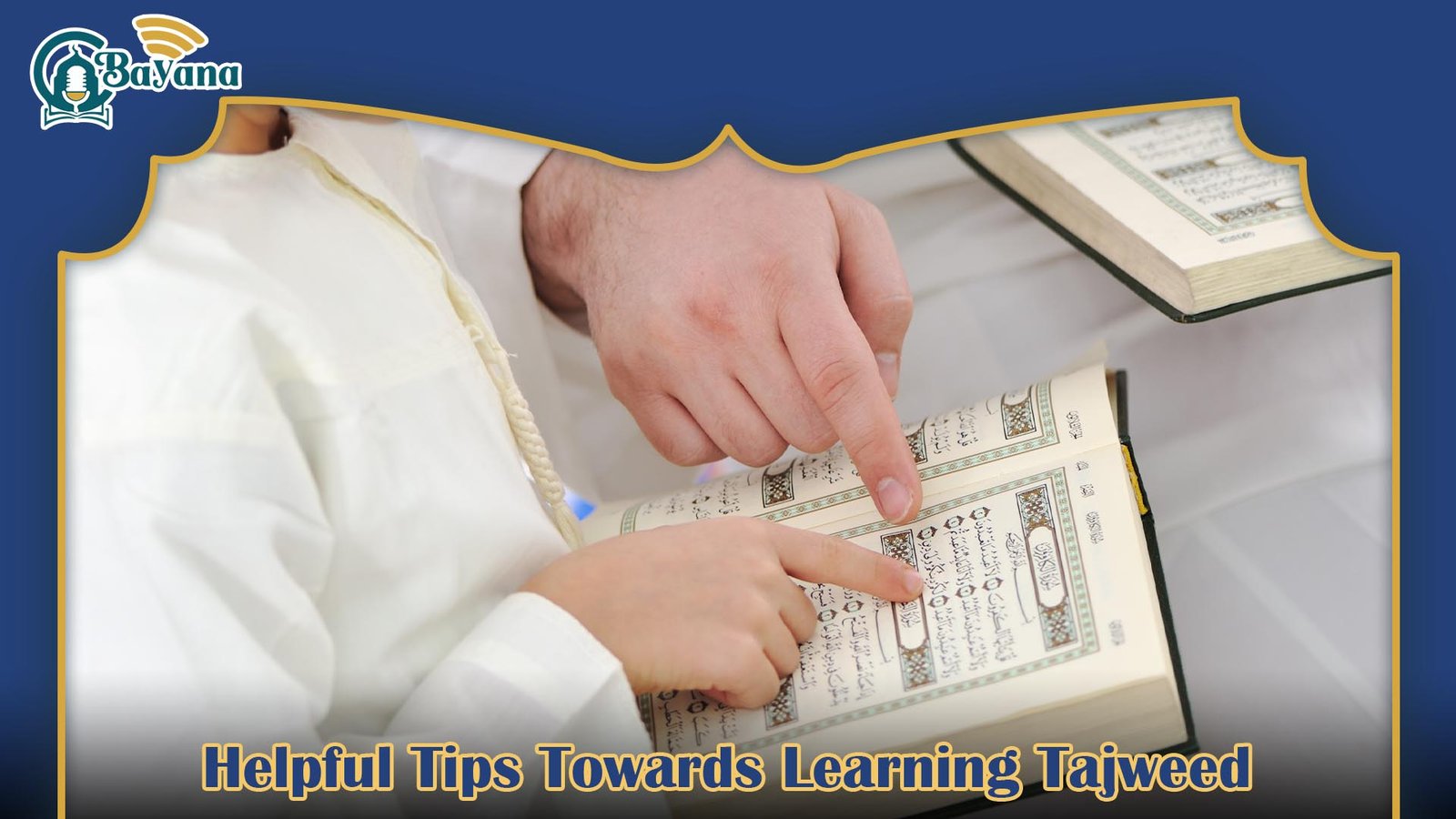
It is essential to find a qualified Quran teacher from a reputable institution like Bayana Quran, who has studied Tajweed to listen to your recitation and correct your mistakes. Tajweed cannot be effectively learned from books alone because proper mouth movements and sound articulation are crucial, and only a skilled teacher can ensure that you are applying the rules correctly. Quranic recitation is a science passed down through generations via teachers, maintaining an unbroken chain back to the Prophet Muhammad (PBUH).
Use a reliable book that explains the rules of Tajweed, and study each rule gradually. Apply what you learn step by step with the guidance of your teacher. Following charts and visual aids can help you better understand and remember the rules, InshaaAllah.
Listen regularly to recordings of clear and skilled Quran reciters (for example, at websites like www.reciter.org) at a moderate or slow pace. Pay close attention to how they apply the different Tajweed rules. Repeat after them, striving to imitate both their pronunciation and melody. Notice how their tone changes according to the meaning of the verses they recite.
Practice applying the rules to Surahs you have already memorized, and never hesitate to review and correct your recitation. Revisiting previously memorized Surahs is important to ensure accuracy and proper application of Tajweed.
Consistent practice and repetition are key to mastery, InshaaAllah. As Ibn al-Jazaree stated in his famous poem on acquiring Tajweed:
“And there is no barrier between learning it and abandoning it,
except that one must exercise the tongue with it.”
May Allah grant us all the ability to honor His Book by reciting it correctly and make it more beloved to our tongues than anything else. Ameen.
Read also: Quran Classes